
BLOG, BLOG, BLOGGITY BLOG

featured_badge


Publication of a book these days requires an author to be facile with social media. I’m still learning, but I do have TWO guest blogs now up.

Appearing on current RomCon blog—a piece on “The Comfort and Discomfort of Books.” If you’re inspired by my thoughts, feel free to add books that comfort you OR have helped you change. There’s a book give-away associated with this one. RomCon is an annual conference designed for readers of romance novels, along with reviews, ratings, and website. Read my blog under the “Contemporary Romance” blog section at http://www.romcon.com/BlogRetrieve.aspx?PostID=511242&A=SearchResult&SearchID=3057805&ObjectID=511242&ObjectType=55

Then my fellow author at Prism Book Group, Linda Carroll-Bradd, kindly invited me to give insight into the heroine of my book Falling Like a Rock. Elaine Svoboda is spunky and determined but somewhat misguided in her efforts to give her life direction and find a special someone. Visit and comment on her blog “Musings About the Writing Life” at http://blog.lindacarroll-bradd.com/

Tipsy, Wobbly, Everyday Life

thorneheaderAppearing on Danielle Thorne’s blog, “The Balanced Writer,” 7/25 through 8/2/14, “Tipsy, Wobbly, Everyday Life. . .Plus a book give-away.”  Balance becomes a challenge as we age.  . .Zumba, exercises, nothing seems to help. . .This struggle makes me wonder about balance in life generally. We usually think bigger is better, but how does this measure up against the concept of balance? See more at http://thebalancedwriter.blogspot.com/ and register to receive free copy of my new novel “Falling Like a Rock.”

If our eyes hurt, is it because the beam in our own eyes bothers us as we focus our attention on the mote in our friend’s eye?

finger pointingOver coffee in a cozy restaurant, my friend Margie was talking about an acquaintance. “All she ever does is complain about her physical condition,” she said. “If not her allergies, her bad back. If not her back, her heavy periods. She’d probably feel better If she didn’t discuss them so much.” I agreed, and we continued our conversation, which consisted, you guessed it, primarily of Margie’s analysis of the current state of her own health.

Another day, another friend on the telephone. We’d reconnected with a third woman after several years. “I remember now why I stopped seeing her,” said Jolie. “She depresses me. She never has anything happy or interesting to say. Complain, complain about how this person was rude and that relative treated her like dirt.” Then Jolie updated me on the status of her sister after a recent visit (it went badly and the sister was boring) as well as a new neighbor (ill-mannered, always borrowing tools).

A former boss believed in honesty along with positive and instructive critiques. He claimed. But woe be to the employee who, like me, mentioned a case in which other workers had a valid complaint and suggestion for improvement. He went into defensive attack mode. To hell with working for change.

After incidents like these, I started noticing a phenomenon. If someone complained about a personality trait in others, sure enough, the moaner demonstrated that same characteristic. Like my co-worker—candid, brusque, eccentric in her appearance—with nothing good to report about another woman, who actually was much the same as she, simply  thirty years older.

What’s up? We seem eager to identify flaws in others but not ourselves. Don’t blame contemporary society and self-centered Gen Xers. The phenomenon is mentioned in the Bible’s “Sermon on the Mount,” and addresses the mote in your brother’s eye vs the beam in your own.

My first inclination is to inform whiners of the errors of their ways. But when I observed informants, I realized they were as annoying and blind as the complainants. Like the relative who continually criticizes me for offering my suggestions for improved behavior (I won’t label my action as “criticisms”) to children. The pot calling the kettle black perhaps.

Those who exhibit this behavior most commonly might be accused of hypocrisy, engaging in the same behavior for which you reproach others. While in religion, hypocrisy might be a straightforward error, the psychological explanation is complex.  This area of study includes the quality of self-deception along with the action of “projection”: denying an unpleasant trait or impulse in yourself while attributing it to others. In the extreme, it may characterize a sociopath, someone who feels exempt from common social standards and responsibility. .

Now that I’ve identified this common quirk of human nature, what do I do with it? Laugh at the foible?  Find some tactful way to correct others? Probably it’s best to be vigilant about my own behavior and accept a friend or acquaintance informing me of my own shortcomings. Although this will be a challenge because the beam in my eye is blinding me.

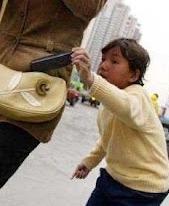
What’s with the guy who sneaks into the house and steals small, worthless items? Doesn’t he have anything better to do?

thiefYesterday I couldn’t find the three bratwurst I’d stored in the freezer for a quick weekday dinner. I took every single bag of veggies, chicken breast, ice cube tray, and ice cream container out and rummaged thoroughly. No brats. The mysterious petty thief must have returned.  We began getting visits from this specter when my son in elementary school galumphed through the house demanding, “Where’s my ruler?” and “I can’t find my quarter. Who took it?” I’d tell him a very clever thief who specialized in sneaking into our house entered during the wee hours of the morning to take his belongings. Inevitably one us would find the missing item, and we realized the thief had re-entered to return my son’s things.

Since that time, the sneaky thief has become a regular visitor. Who else could be to blame for the dozen of pairs of my reading glasses that have gone missing? He must have one pierced earlobe, for half of a set of earrings disappears periodically. He even follows me to restaurants and snatches my scarf at least once a season. Then his coup de grace: at my mother’s apartment, my sister, brother, mother and myself fell victim to his craving for keys, for all of our sets had vanished.

I refuse to believe we’re misplacing items or are careless, although my husband uses each incident to deliver a mini-lecture on the importance of consistency. “Always put the article in the same place when you’re done with it. Then you’ll never lose it.” One study claims the average person misplaces up to nine items a day, and one-third of respondents in a poll said they spend an average of 15 minutes each day searching for items.

My husband doesn’t understand our family’s at the mercy of an unscrupulous offender. We’re lucky the villain hasn’t turned his sights on more valuable belongings, say dollar bills or cell phones.  He did enough damage with the bratwurst. I comfort myself that he probably was hungrier than anyone in the house. Needed the food more. Wasn’t just trying to drive me crazy.

Does the banning of books protect children and the weak-willed or does it interfere with our freedom and intellect?

courtesy Ryan McGuire of Bells DesignI recently read The Perks of Being a Wallflower, by Stephen Chbosky. This tale, set in the early 90s, carries overtones of The Catcher in the Rye and other coming-of-age novels, climbed the best seller lists, spawned a decent film, and spurred controversy.  After I finished it, I wondered if it would wind up on the list of most-challenged books (a challenge is an attempt to remove or restrict written materials), and sure enough, it did.

The Top Ten Challenged list, produced annually by the American Library Association, serves as a rallying point for pro- and con- censorship advocates. The 2013 compilation contains two other books I’ve read, The Absolutely True Diary of a Part-Time Indian, by Sherman Alexie, and The Hunger Games by Suzanne Collins. While I’m unable to weigh in on the value of Captain Underpants or Fifty Shades of Gray, never having read them, the Alexie work ranks as one of the top 25 or so contemporary novels I’ve ever read, and The Hunger Games contains vivid examples of issues suitable for passionate insights into and discussions around contemporary society.

Years ago, our leaders struggled with the definition of porn. A book had to have some sort of redeeming social value to be allowed into the public’s grasp. That debate seems to have disappeared, but the good fight remains, especially to protect children. Does each of the books on the challenged list contain redeeming social value? Perhaps. Should any of them be pulled off the bookshelves? Doubtful.

One reason for censorship is the protection of minors. Another is that reading about questionable behaviors only encourages them. Unfortunately the news and daily life demonstrate that reality, not fiction, imposes itself on everyone of any age. Our children have to learn about mass murders (Columbine), murders based on gender and race (Matthew Shepard), neglect (foster children loaded with drugs for psychotics), terrorists (Boston marathon), international terrorism (9/11), along with untold instances of bullying abuse, rape. Who can protect our kids from knowledge about those horrors? They’d better be prepared to deal with these issues, at least at the emotional level.

Some things occur outside your sphere of interest to impact you, whether you want them to or not. The books on this list and similar offerings allow readers to work through their own emotions, responses to soul-searing issues.

When we all faced 9/11, my three-year old granddaughter taught me a lesson to deal with tragedies and controversial issues. Despite being sheltered from disturbing visuals, she knew something bad had happened. She also noticed people exhibiting American flags as a symbol of undefeated spirit.  Failing to distinguish between one flag and another, she collected small state flags and displayed them around the house to raise everyone’s spirits. That’s when I realized the importance of taking a positive step to establish your control over yourself and life.

That’s exactly what these books provide—a way to begin to comprehend the amazingly complex issues children as well as adults face. The ruckus over these particular books eventually will die down and others take their place. An example, few seem to complain nowadays over Madonna’s Sex book.

Or maybe not.  The Catcher in the Rye still raises hackles in some communities and visits the most-challenged list regularly. It also appears on numerous best-books lists.

(photo courtesy Ryan McGuire of Bells Design)