The Thrill of Writing About Love

By Khaled Talib, author of thrillers

In my newly released thriller, Gun Kiss, the protagonist falls in love with the co-protagonist, a common occurrence in books of all genres. As I sought reviews for the novel, I queried a book blogger who agreed to read it, but it didn’t turn out well for me. The blogger was abusive in her review of my book, highlighting nothing positive about it. In fact, she even went so far to say it wasn’t a book she would recommend to anyone. Yet she cared enough to publish the review on her blog, book cover and all. Why bother if she hated it that much?

That blogger was just one of the many reviewers I had contacted. Of course, I didn’t agree with the reviewer’s unsubstantiated comments. Like other authors, I have enjoyed my fair share of positive reviews. Gun Kiss was no exception as it also received praise from some renowned critics.

I could have responded to all her nitpicking, but I didn’t see the need because other reviewers and readers didn’t have problems with them. However, the blogger complained that “like instantly” after seeing her once. She added: “Had seen her once, when he rescued her and now he [sic] in love.”

It seemed to me the reviewer’s closer attention to my words would have revealed the depth of the story. I had explained the protagonist’s reaction when he first sees the co-protagonist, a famous Hollywood movie star, despite the circumstances in which they were both embroiled. I explained his excitement and infatuation amidst chaos, then later some reflection of thoughts when the protagonist was in a better situation.

But really, why shouldn’t a character in a book fall in love instantly? It’s not unnatural. I knew someone who fell in love with his wife in a heartbeat at university, then proposed to her after two weeks. I also know cases of men who got married within a day’s notice. Some people might surrender to love slowly, but others experience it at lightning speed. What has time got to do with the human heart?

An important realization for authors in order to reach readers is that the story must sound believable. It must sound authentic. To do that, all writers know that they must control their imagination while infusing information or facts that sound realistic, albeit in the realm of fiction. While writing Gun Kiss, I didn’t stray from the lessons I’ve learned. I did no wrong in creating scenes where the protagonist expressed his love for the co-protagonist. In fact, I wrote those scenes reinforced by fact.

ABOUT GUN KISS: A Hollywood movie star is abducted by an obsessed drug lord. With the help of a reluctant army friend, Blake Deco, a former US soldier, mounts a daring rescue across the border. What he doesn’t expect is to have feelings for the actress—or that a killer is hunting them.

ABOUT THE AUTHOR: A former magazine journalist and public relations practitioner, Khaled lives in Singapore. His journalism stint included a three-year stay in Egypt. The author is a member of the International Thriller Writers. Gun Kiss is his third novel.

Official Website: www.khaledtalibthriller.com

Amazon: http://getbook.at/GunKiss

(Also available on Kindle Unlimited)

Facebook: https://www.facebook.com/khaled.talib/

(This piece is based on an article that originally appeared in Marie Lavender’s I Love Romance Blog, https://iloveromanceblog.wordpress.com)

A Few Random Thoughts About Trees for Arbor Day and Spring

There’s something about trees that makes me feel good without thinking. I might believe I’m as low as the soles of my shoes, worrying about car payments, anxious over diplomatic relations with North Korea, fuming about my flopped soufflé, but let me walk by a spruce, aspen, maple or oak, and that mood starts to dissipate. The day seems sunnier, the air, fresher.

Doesn’t matter the season. Every season brings its own joys and discoveries. Last winter a frost would hit, and leafless trees would be iced with the most delicate coating of crystals. In spring tiny green buds push through the protective scales as if sampling the climate to decide if the temperature warrants further growth. Trees seem to pulse with life itself.

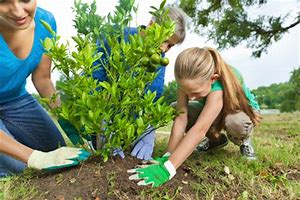
Arbor Day is coming up, the last Friday in April in most states. I remember planting a sapling with great ceremony with my class in elementary school, as well as sporadic similar activities over the years hosted by community groups. Why did we bother? When with typical human irrationality, for centuries we’ve cut down and decimated trees by the millions. England, Scotland, and Ireland used to be covered with forests, but mankind happily thwacked its way down to the earth to use the resources for more urgent needs.

Now Arbor Day, as well as additional activities like the Tree City USA program, are trying to make amends by encouraging natural tree and plant life in this country. However, this is not a global trend. A report from the Food and Agriculture Organization of the United Nations says the single largest source of greenhouse gas emissions in Latin America and the Caribbean is the conversion of forests to other land uses, such as agriculture. In Brazil alone, 78 million acres of rainforest are lost every year! More than 20 percent of the Amazon rainforest is already gone. Perhaps they need a huge horde of elementary school students swarming into the region to plant seedlings.

Unfortunately, do-gooders’ enthusiasm may outstrip scientific knowledge. Planting the wrong type of tree may do more harm than good if we’re discussing global warming. The New York Times reports using conifers where broad-leafed once flourished might increase global warming, while in colder regions, trees absorb more sun heat, again raising ground temperature.

We can’t win, at least until we learn there are no simple answers to complex problems, no matter what the issue. Until we can figure out the solutions for the dilemma of trees and global warming, we can treasure the trees currently in our lives. Parks, thoroughfares, pots, farms, mountains, forests–trees are everywhere. Let’s take note by celebrating the low-key, simple, friendly observance that’s Arbor Day.


On a Trip, Beauty Is in the Eye of the Beholder and In the Strength of Your Shoulders

The rule in our house for travel has always been the same. Each person’s responsible for toting personal luggage. Unless I was eight months pregnant or in a full leg-cast with crutches, I knew my porter would be me.

This wasn’t a problem when we were young and usually schlepped backpacks. We traveled Europe with one each plus a tote bag. Even when we set off on cross-country car trips, we followed the rule. Small children were exempt, of course, but by about age eight, our kids quite competently managed their things.

However, a number of years ago I noticed the space for my clothes was contracting. I had to remove a pair of shoes here, an extra jacket there, first a swimsuit cover-up, then a fluffy bathrobe. What was happening? Was my luggage shrinking? Did my increased poundage result in enormous, space-eating outfits?

Then as I laid out the items I was packing in orderly heaps, I noticed an especially large mound. The load I mentally labeled “Health & Beauty,” ever since my time as a saleswoman at JC Penney’s decades before, surpassed all my clothing. What had happened? I knew I neither was using more makeup nor carrying additional beauty equipment.

More health items. More medicines. More paraphernalia to have on hand in case I threw a muscle out or strained a joint. Age had caught up with me. A short list:

  • Glucose for low blood sugar episodes.

  • Vitamins of all sorts

  • Prescriptions for me and my husband

  • Special washes and creams for skin conditions

  • Herbal and naturopathic supplement designed to reduce impact of viruses

  • A circular pillow that fit around my neck to ease naps while traveling

  • Elastic supports for knees

  • Several specially designed implements to keep decay and gum disease at bay

  • At least 9 pairs of glasses: reading, reading back-up, reading sun; same three for medium distance and far. Maybe some bifocals.

As I surveyed the piles, I realized I’d reached an age-stage. Just as babies need lots of extras, so do aging folks. One method to approximate someone’s age is to survey his luggage. If his health and beauty pile is larger than his clothing, he must be approaching 55 or 60. Ditto women even if their hair and lips appear like youngsters’.

I’m not alone in packing more items. My sister sometimes takes her sleep apnea equipment, which is at least the size of a shoe box. A woman I know can’t sleep unless she packs her special large pillows to cushion her body.

So what does this mean? Another example of age discrimination. Why can’t luggage limits be based on age and the amount of necessities? If the privilege of affordable housing can be given to those above a particular number of years, certainly airlines, trains and buses can waive the restrictions on baggage for us.

As for the practicalities of body strength, if we get tired of toting the extra weight, we can reduce the number of items we lug. To disguise the need for extra makeup we can wear concealing scarves, droopy hats, or extra-long bangs. To hide physical disabilities, opt for obscuring baggy clothing. Squint instead of packing extra glasses. Or just suffer discomfort without our extras.

Can Saving Money or Possessions Threaten Your Happiness and Comfort?

I get my penny-pinching ways from my father. He grew up in the Depression and never escaped his childhood habits. If bananas were cheaper at one store than another, that’s where he’d head. He saved rubber bands, string (pieces tied together and wound in big balls), children’s clothing passed down from one to another, magazines. He wasn’t a hoarder; his things were fairly well organized, and he didn’t purchase for the sake of the buy. He was a saver. Once he recycled an old lounge chair into a bed for my little brother’s overnight visits. He pinned the fraying, interlaced webbing to the frame when it began wearing out. Another time he used a rope as a belt. Fortunately, although I was humiliated in public, this wasn’t with a business suit but over the weekend.

Now I’m somewhat the same. I’ve washed, saved and re-used small plastic bags and dutifully accumulate the larger ones for groceries and trash. At restaurants I pack home the bread that accompanies meals and bits of leftover meat and vegetables destined for soup. I excuse myself by claiming to be a conscientious environmentalist, tender of the earth.

I can’t blame these habits simply on my environmentalism though. I often compare prices on menus to see if ordering à la carte is cheaper than ordering the dish as it’s listed. The other day I discovered if I asked for eggs, toast, and hash browns separately, I’d save almost two dollars! When I pointed this out to my patient granddaughter, she simply nodded and murmured “mmm-hmm.” My thrifty ways embarrass her. When my family was poverty level, I prided myself on cost-cutting. It was a game to see what I could save.

Now that I no longer am broke, I still pride myself on my parsimony. But I’m beginning to wonder why. What am I saving things, including money, for? Shouldn’t I allow myself to enjoy it? This idea occurred to me when I caught myself wanting to scold my husband for writing the items he wanted me to buy at the grocery store ON A SEPARATE PIECE OF PAPER, not on my original list! Didn’t he know he was wasting paper? Even I had to admit this was going a little far. After all, I make our scratch paper from sheets with one blank side rescued from the trash.

More importantly, I may be denying myself opportunities to delight in my life by focusing so much on saving. Let loose and have some fun, I tell myself. Buy a new coat since the old one is threadbare (I did). Donate the broken futon to someone who will repair it, and buy yourself another (I did that, too). Go out to dinner once a week. Pay someone else to paint the living room. Take that cruise now that I can afford it. After all, the value of money lies in freeing me to experience different things and to relieve me of the tedium of poverty. As long as my income is five dollars more than my expenses, I’m rich.

Talk Is Cheap and We Get What We Pay For

Like the weather or football, when health’s the topic, we always have something to talk about. Especially as we mature. One stereotype of aging is that people talk more and more about their health, and not in a good or positive way. Apparently, we drone on to the point of boring our listeners. Why? Two possibilities: health preoccupies our time and our thoughts to a greater degree, or because we have fewer other interests.

Decades ago, after suffering through regular rounds of extreme boredom at family gatherings during which senior relatives delivered lectures about symptoms and treatments, I and my friends took oaths decades never to prattle on and on about our ills. In our smug superiority, this was our promise, yet our practice nowadays is to rush into a room with a litany of languishes. This doesn’t improve our conditions, it certainly fails the test of conversational interests, yet each of us can’t wait for the other to yield the floor so we can launch into our personal spiel. I know one woman who complains frequently about older friends that discuss health to exclusion of nearly every subject. When done with this, she promptly indulges in a recitation of every ache and each therapy she’s undergone in the past several months.

Why do we do this? None of us are doctors, so we can’t diagnose or relieve or provide a service, although we’re never prevented from expressing our opinions. In fact, we usually wind up trotting out every particle of information or opinion we’ve stumbled over related to a health condition. These may be contradictory, erroneous, or pea-brained. Makes no difference. Still fascinating. To us if not you.

Perhaps in this manner we enhance our friendships. Or air our secret fears. Or simply pass the time in a more appealing fashion than discussing the climate. However there should be limits. When someone complains of indigestion, surely no more than five or ten theories as to cause and effect are reasonable to explore in casual conversation. Apparently not. Gluten, wheat sensitivity, irritable bowel syndrome, gastritis, appendicitis, acid reflux, lack of probiotics, food poisoning, various cancers, autoimmunity offer some of the possibilities. Every person we know has experienced one of these at some point. Even if not currently suffering from some ill, the equally interesting aspect of what we’ve done that’s led to our status.

Many suggestions (dare I say too many?) about what to do, what’s good, what’s a cure-all eat up as much chatter as complaints themselves. I’ve known supporters for a particular diet, say macrobiotic trot out an entire grocery list and menu plan, then threaten me with disaster if I don’t comply with their belief. Because health connects to all aspects of life, debates quickly expand to incorporate economics, government, art, and psychology, even death, because everyone dies from something.

My primary quarrel with heath as a topic of conversation lies in its tedium. People simply won’t turn off their repetitive, monotonous, self-centered spiels. I want to yell, “Someone turn on Wheel of Fortune!” I’m nearly ready to plead for politics as a replacement. Equally boring, but at least people get angry, hot under the collar, so the energy flows, and we just might be exposed to a new idea.