How You Can Have an Extraordinary Life—Read!

Shay CU3

Remember all those tiresome lectures from teachers and parents telling you to read, read, read?  Turns out they were right. 

One of the necessities for an extraordinary life is to be able to think well into your declining years.  And research in the journal Neurology confirms—and helps explain why—people who habitually read, write, and process heaps of information are less likely to decline mentally late in life.  

As reported in Pacific Standard, an opinion and think journal, a lifetime of reading slows decline in cognition, even providing protection against the impacts of common old-age neurological disorders.  (See http://tinyurl.com/lwcxd7r)  

As a writer, I value any snippet of information that encourages people to read, no matter how protean* the subjects of the reading material may be.  Right now, I’m concentrating on romances in my work, although I write in many areas.  So, hey, if you read romances, sports, mysteries, zombies and vampires, instruction manuals for computers, limericks, or the backs of cereal boxes, all to your own good.  Just do a heck of a lot of it. 

Maybe eventually you’ll pick up some of my publications.  Even better, you’ll be able to understand what’s written there.  

*Protean: Exhibiting considerable variety or diversity
Getting old is hell

immigrants small B “Getting old is hell.”  Advice from my grandfather years ago.  As time builds up on me, I’m starting to realize the truth of his statement.  Backs get creakier, joints wear out, muscles weaken, teeth break. 

Do minds age, too?  Shed memories and facts and knowledge like a tree lose leaves in the fall?  I like to deny it, but I fear it may be so.  Everyone I know over a certain age labels absentmindedness a “senior moment.”  If she walks to a room to find a sweater and upon arrival has forgotten what she’s looking for, she blames aging. 

One of the worst results of aging is that we lose the stories of our elders.  I saw an old friend yesterday.  As we chatted, he seemed disoriented; and I worried about his state of mind.  I knew I’d miss the anecdotes of his recent travels, his sharp insights into politics.   

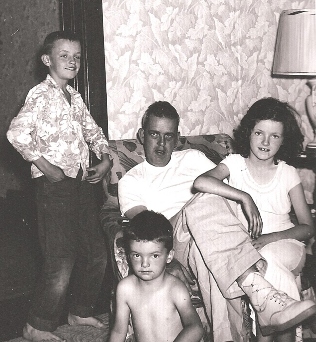
I think about my grandfather and his tales about WW I.  He was gassed in the trenches, survived the Depression.  My mother, whose group of girlfriends daringly took nude photos of one another as teens.  My father’s chronicles of a rough childhood in blue-collar Boston.  (For more on this topic, see my “The Significance of Stories, http://sasee.com/2008/11/01/the-significance-of-stories/)  

How do we capture and remember these extraordinary incidents in our senescence*?  Usually we don’t.  Sometimes writers will through their stories.  Do you have family stories you recall or ones of your own you’d like to pass down?  

*   Senescence: the state or process of being old.

Who can be extraordinary?

I have a cool dentist. Not only is Dr. Steve a skilled and caring practitioner, he’s also a musician and composer of the folk-rock variety. His group, the Steve Law Band, performs in the metro Denver area, and I last heard them at the Capitol Hill People’s Fair.

So what? Writers are interested in all sorts of individuals. Each person has his own story. Dr. Steve is a multi-dimensional person and a great example of using your creativity and smarts throughout your life. Ordinary people can have extraordinary lives. Sample Steve’s work at http://www.stevelawmusic.com and learn about his dentistry at http://www.metrodentalcare.com/

I know lots of folks who, if you passed them on the street, might be overlooked. Once you get to know them, you learn of their fascinating interests and their exceptional activities. One woman gave me a five-minute overview of the intertwined social lives of common barn swallows, who work together to feed and protect fledglings. Another got the inside view of Alaska’s natural grandeur and shared it with me. Still a third, supposedly retired, just published a book on branding and marketing.

Goes to show that anyone just might have an extraordinary life, if we take the time to find out. Do you have a favorite contact you’ve learned from?