Jury Duty – Lessons In Fact and Fiction

081223-N-8848T-530 GREAT LAKES, Ill. (Dec. 23, 2008) Legalman 1st Class Christie Richardson, a trial services legalman assigned to Region Legal Service Office Midwest makes an opening statement for the prosecution to a jury during a mock trial. Richardson was part of a legal team demonstrating the legal system for 22 Navy Junior Reserve Officers Training Corps (NJROTC) cadets from Chicago-area high schools. (Official U.S. Navy photo by Scott A. Thornbloom, Naval Service Training Command.)

The other night I settled down to watch a courtroom drama. In the story, defense attorneys in a gun violence case try to bribe a jury. As a writer of fiction, I know that authors get to construct a world of such extremes that few of us would want to live there. So it was with this movie. Both hero and heroine and the bad guy attorney set out to get what they could, double crossing each other to the tune of $15 million, which was the price for buying the jury’s verdict.

Let me tell you about my own experience of jury duty. While called several times, I’d never been selected before. So it was as a complete novice that I entered the jury room and met my fellow citizens who would rule on a drunk driving case.

The defendant aroused some compassion. She was a pharmacy student, and conviction could have ruined her career. But as the case unfolded, it became clear that she acted deliberately to try to deceive police. Taken to the police station for driving erratically after leaving a bar, she refused to take a breathalyzer test. She promised to take a (supposedly more accurate) blood test at a nearby hospital and submit the results. She knew that the level of alcohol in the bloodstream lessens after several hours and so she waited to go to the hospital. She did not realize that the hospital would note the exact time of the test, and report this to the police.

In the jury room, we jurors got acquainted. We worked in construction, the post office, and in real estate. We were young and old, homebodies and partygoers, and people who enjoyed a drink or two. We were not judgmental. But we had to be. We discussed the case carefully. We talked about our values. We talked about the importance of taking responsibility for one’s actions and for being honest. The young defendant had not injured or killed someone (though that was sheer luck) and so some of us struggled with the idea of hurting her future with a guilty verdict. In the end, we felt her lack of remorse and the fact that she’d tried to use her professional knowledge to escape the consequences of breaking the law must lead to a guilty verdict.

What I learned from my days as a juror was this: most people recognize what is right and what is wrong. Meet random strangers in a jury room and you’ll come out, as I did, full of hope for your fellow human beings. Still, criminal cases provide fodder for the writer. We have to create situations where characters do stupidmargaret-spence-5819_pp2-300x298 things. That’s because no one wants to read about perfect people. We
can all sympathize with a girl like our defendant, who was only as foolish as any of us. But we, her peers, found her guilty, because not to do so would make a mockery of the law.

Margaret Ann Spence

Margaret Ann Spence’s novel, Lipstick On The Strawberry, will be published by The Wild Rose Press in 2017. She blogs at http://www.margaretannspence.com.

Comfort books are better for us than comfort food

woman-reading-book-1Comfort food.” A phrase to describe nibblies we crave when we’re sick, depressed, and out of sorts.  Often based on nostalgic or sentimental feelings, especially from childhood, valued by the diner. This describes dishes like mac & cheese, chicken soup, apple pie, tomato soup, fried chicken. While comfort foods do bring comfort, I’ve found another activity that accomplishes the same end without calories. Comfort books.
Often books read in childhood or adolescence, sometimes a volume from adulthood that I’ve read over and over, they function like an old friend. I greet them with a cry of recognition and close them with a sigh of satisfaction. For me, this means they aren’t terribly complicated and at least some of their characters are pleasant, interesting and good. Needless to say, they wrap up happily. Other people include more challenging or depressing material. It’s up to you.

I’ve discovered a number of my childhood favorites are now in the public domain. This means I can locate them as free ebooks. I recently reread Heidi and Tarzan of the Apes, and made some discoveries. I still loved the description of Grandfather toasting cheese over the fire in Heidi. (Hmmm, is there a relationship to mac & cheese?) But there many more descriptive passages of the mountains, flowers, snow, city, that jumped out as good writing.  Tarzan, too, contained much more illustration than I recalled, as well as action and developments that moved so rapidly they can serve as examples to improve my own writing.

The first book I learned to read on my own has become a comfort book. I was so enamored of The Backward Day,the story of a little boy who gets up and puts his clothes on backward and sits backward at the table and walks backward to school, my first-grade teacher had me visit other classrooms and read it out loud. I’d love to locate a copy of The Wonderful Visit to the Mushroom Planet, discovered in seventh grade and the impetus for my fascination with some science fiction since. Another series in the scifi genre, the Vorkosigan saga by Lois McMaster Bujold, distracts me in times of political crisis and gives me a positive vision of the future.

Since I realized that many of the oldies are, indeed, available as free ebooks, I’ve downloaded more. The Five Little Peppers, Anne of Green Gables, Wizard of Oz, Black Beauty. A number of websites provide free electronic versions. If you search Amazon for titles of old favorites and add “free,” you can usually find them. Project Gutenberg specializes in converting public domain books to ebooks at no charge (https://www.gutenberg.org) as do others (http://www.freeclassicebooks.com, www.manybooks.net, etc.). Mysteries, romances, history, philosophy, plays, an endless stream for your pleasure and comfort.

I thought I invented the term “comfort book,” but I find through a search, others also know the concept. If you go online, you’ll find sites to guide you to these readers’ individual lists. And next time you need a little emotional comfort, try an old book favorite. Heart and soul, you’ll feel better, and you’ll add zero calories.

Getting Edited and Editing

 Guest blog: Hear from a writer on the ups and downs of editing                 

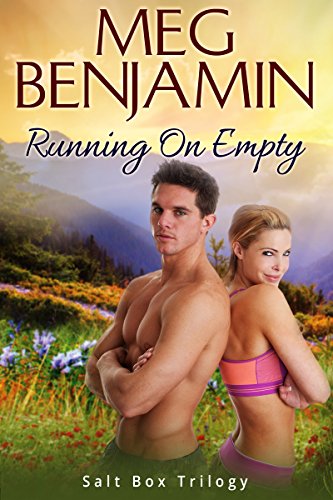
 meg_benjamin          By Meg Benjamin 

Earlier this year, Samhain Publishing, which bought my first book, Venus In Blue Jeans, as well as nine others, announced that they were closing. Like most of Samhain’s authors, I was saddened. I knew many people who worked for them, a very talented bunch.

But Samhain’s closure had a more immediate effect for me. It meant that my novel Running On Empty was no longer scheduled for publication. I could have tried to find another publisher; but the chances of anyone wanting to take on the third book in a trilogy where the other two books belonged to Samhain were slim at best. I could have let it go, leaving the trilogy unfinished, but I didn’t want to do that.

My third choice—and the one with which I decided to go—was publishing the book myself. Self publishing (or “indie” publishing) is increasingly widespread. An entire industry has sprung up for authors who want to present their own, professionally produced books, including experts in art, editing, and formatting.

Self-meg-benjaminpublishing involves two main expenses—covers and editing. Of the two, beginning writers are more likely to spend on the former than the latter. They’re making a big mistake.I came to this conclusion from a unique perspective—I was a freelance copy editor myself for several years. At one time I had large chunks of the Chicago Manual of Style memorized (note to fellow copy editors—it goes away with time). No way I would edit my own stuff.
On the simplest mechanical level, you tend to read through your own errors, even your own typos. You know what’s supposed to be there, and your brain supplies it even when it’s missing. But a good editor will do a lot more than just catch your mistakes. A good editor will tell you where you’re going wrong in your story and your characters. Editors come to the book cold, without any information about your struggles to get it finished (unlike, say, critique partners). More importantly, they’re not paid to be your friend. The editor is there to provide you with a flat assessment of the weak spots in your work, along with some hints about how to fix them.That’s what you want.

My editor was brutally frank about the highs and lows of Running On Empty, my newest book.I won’t lie—some of it hurt. The pain of criticism is necessary and frequently based on your realization that your work wasn’t as perfect as you thought. When readers complain  indie books are “unreadable,” they may be referring to works that haven’t received the benefit of an independent editor. I was able to produce a much better work thanks to my editor’s guidance.

Years ago, I was part of a critique group led by a well-known author. Group members ranged from rank beginners to seasoned, multi-published writers. A couple of the beginners had never been critiqued before, and they both responded with very public meltdowns. Eventually they both withdrew from the group after a loud denunciation of all of us for our lack of sympathy with their writing. Do I have to tell you that neither of those writers ever made it into print (at least so far as I know)?

Editing does cost a lot. Many editors charge by the word, and most of us write books in the 50,000 to 90,000 word range. But the investment pays off. Edited books may have weaknesses, but they’re usually things the author knowingly chose to do.

For better or worse.

(Meg Benjamin is an award-winning author of contemporary romance, including the Award of Excellence from Colorado Romance Writers. Visit her at MegBenjamin.com or facebook.com/meg.benjamin1. )


Adrift with no connections or support. How will I function? Am I addicted? Four days without the Internet.

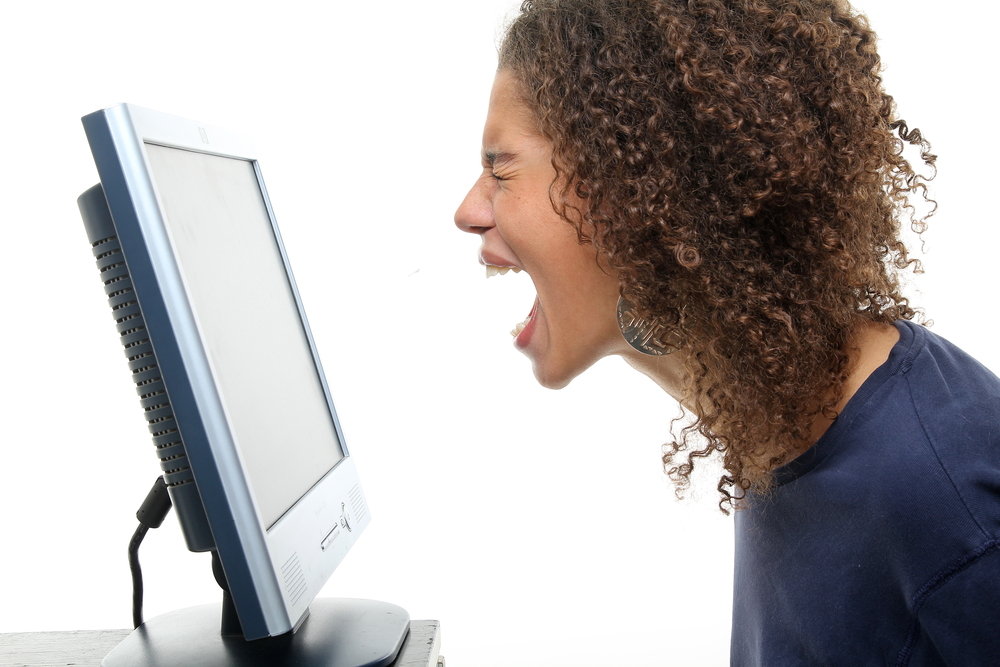
woman-screaming-at-computer-shutterstock_119635360Return with me now to the thrilling days of yesteryear. No, not the Lone Ranger, for those of you mature enough to remember that show. But to pre-Internet days.

For four days recently, my Internet connection was down. Frustrated? Yes. Unproductive, friendless, and isolated. No.

After I’d clicked on every piece of equipment in my possession designed to link me and the world at large, then discovered no signal, I panicked. What would I do? How could I work?

I admit pretty much every time I reached for a piece of information, be it a phone number, confirmation of a fact, or the weather report, and couldn’t get it instantaneously, I grumbled mentally. Particularly when I needed to confirm meetings with several people, or actually hold a meeting via Skype, my dissatisfaction increased. But I survived. I visited several locations with free Internet to catch up on essentials.

As I sought alternative methods to figure out when a snowstorm would hit, I wondered what people think Internet access is doing to us. Some are concerned that too much Internet reduces the deep thinking  that leads to true creativity. Was I more creative without the Web? I don’t think so. My connections always seem to spark more ideas and exploration. However, I believe I got more actual, productive work done during the hiatus.

Then there’s the theory people who are socially anxious are more likely to use electronic communication so they can avoid interaction. I don’t know if I qualify as socially anxious, but I definitely use email to avoid extended conversations and control the content. During the interruption, I had to use the phone which I hate to do. So only a few people heard from me, which probably was appreciated by all.

During times of crisis, such as the terrorist attack in Paris, I know I’d miss access the most. With television and radio, I can’t search for exactly what I want, and I feel inundated by uncontrollable floods of terrifying pictures and reports.

On the whole, my involuntary exclusion went well. I didn’t have withdrawal symptoms; it was kind of nice not to feel pressure to interact constantly. I missed little but the ability to look up word definitions immediately as I’m reading a novel, but little else. Still I felt out of sync with the rest of the world, disconnected. I was on the dark side of the digital divide, one, we’re assured, creates an unbridgeable gap and marks the adult needy as surely as a poor child is labeled by being eligible for free school lunches.

To avoid landing in the situation in the future, I know what’s inevitable, I’m forced to be dragged kicking and screaming into the next stage of my techie progress—perpetual connection via a smart phone.

How I Learned About Bullying at an Advanced Age and What I’m Doing About It

bullyL2810_468x350The trouble with bullying, it’s hard to identify. We picture a ring of kids taunting the girl in shabby clothes or a huge monster looming over a scared skinny boy or the superior snotty rich guy with a nasal whine belittling the scholarship teen at school.

But is teasing an acquaintance about her new haircut bullying? Threatening to rear-end the driver who cuts in front of your car when you know you’ll never follow through? How about sending a series of text messages laden with ominous warnings to your business competition?

Like nearly everyone else in this country—except the bullies—I condemned bullying; but I’d never been the target of it. Until several weeks ago. A person on my street, whom I refuse to call a “neighbor” because he isn’t neighborly, became my personal bully. How did I know?

My body’s reaction. When he came over and began to yell, storm, and swear, my instinct told me to run or hide. Since I couldn’t do either, my autonomic nervous system went into overdrive. Every muscle clenched, my breathing increased, my intestines clutched, and I could hardly speak. Many people don’t react this way, but I’ll tell you, it’s hard to take action of any kind when your body’s automatic response to conflict and fear is to shake, run, or puke.

While a number of websites and experts address bullying as only an issue in childhood, it can occur any time. Merriam-Webster defines a bully as a blustering browbeating person; especially :  one habitually cruel to others who are weaker.

What had I done to cause this? Nothing other than come down the stairs and ask a question. This particular person decided he disliked me the first time he met me, and his negativity has escalated with each contact, for reasons unknown to me. Since my immediate response to aggression is terror and guilt (think of the stereotype of a rabbit), I became the victim.

The wrong response. Experts advise you can’t make a bully like you even if you do back flips. (Although I didn’t try that, not being able to perform back flips). You must change how you respond to the bullying. In other words, amend your response. Bullying doesn’t have its desired effect if the intended victim successfully stands up to the bully. Once you have identified a bully and know what to expect from him or her, you must choose not to be a victim. Take a stand and be firm.

Easier said than done, especially in this day of random violence, instant rage, and self-obsession. The advice: the victim’s anguish, fear, and dread get in the way of a successful defense. Because bullies often choose targets who appear unable or unwilling to fight back.

I was surprised my bully has so much hostility since I look harmless, feel harmless. I’m 20 years older, 30 pounds lighter, 8 inches shorter. Maybe that’s WHY he picked me, because he knows he can lord it over me.

That’s how at a very advanced age, I finally learned about bullying. Not by observing my children or grandchildren. Not by watching news coverage. Not by reading written accounts of it. Through actual experience.

However, I knew I had to refuse to let him control my behavior. If I ducked into the house every time he made an appearance or if I stood on the sidewalk yelling obscenities at him, I would be allowing him to dictate my conduct and lifestyle. Very bad for someone who’s spent a lifetime struggling to develop personal inner strength, courage, and independence.

How did I handle this incident, other than to dwell on it ten hours a day for two weeks? I translated his name into a code name, which helped trivialize him in my mind, to an extent. I now call him Stoney. Who can be scared of an adult with that nickname ? I researched bullying on the Internet to decide if that’s what was occurring and if my ideas on handling the situation were valid. They were.

I trotted out every good result to the incident I could think of. And there were a number. First–He didn’t say “fat, f—king old bitch,” so I must have lost enough weight not to fall into that category. Since I might have contributed to the situation by failing to turn on the charm, I’ve been very careful to avoid a grouchy old lady response to the world in general. I smile and greet all neighbors whether I know them or not. I fail to snap at incompetent sales people, instead using a low soothing voice to comment.

Finally, I got a super idea for a complex, scary novel. A writer friend of mine says, “Whatever happens to you, it’s all material.” So, see, the new book’s about this woman who’s afraid of her shadow. And there’s a threatening male neighbor bullying her and making her life hell. And on the farther side of the man’s house is another neighbor who looks exactly like the first woman, but is her complete opposite. She possesses the nerve and strength to perform outrageous acts, like sabotaging his electricity and filling his gas tank with water. And then the two women go back..and…forth….in…..how……they…….deal…….