No Good Deed Goes Unpunished

park-90476_640 Several days ago while going to meet a friend for Happy Hour, I drove through a nearby park. The changing fall leaves, the sun setting over the mountains on the horizon, the wide expanses of lawn were perfect for the mild weather. No season can beat autumn in Denver, and nothing in particular crossed my mind.

Until I spotted the grungy man crouched on the curb by the bus stop. Unkempt men, and the occasional woman, are not uncommon in this park in the central city, and town dwellers usually follow the “live and let live” mandate. But it was obvious this fellow was in trouble. He was mumbling to himself, swayed in all directions, and obviously couldn’t stand unsupported; so I pulled over and called out the window. “Do you need help?” “Yes” was the answer.

At 6:10 I dialed 911 to report the incident. When given the choice, I said the man appeared to need detox more than a regular ambulance. As evening fell and the skies grew dark and temperatures dropped, I waited. And waited. And waited. I made two more contacts to 911 (changing the request to an ambulance as it seemed that might respond more quickly), while a young couple on an outing with two children also called.

Compounding my frustration, on my second inquiry, the operator scolded me for “shouting.” Sorry, but when I’m worried, upset, and frantic, my voice goes up, a not uncommon reaction. It was obvious to me that this operator (and others I’ve encountered) lack elementary training in human responses to frustration.

The man muttered and swayed, sometimes seeming to communicate, others not. Vehicles, now with headlights on, sped by. Real concern that he’d struggle to his feet and land in the street to be run over made me linger. (Advice in these situations is to never leave the person alone.) Finally, at close to 7 p.m., more than 45 minutes after the first call, the emergency personnel showed up. Yes, they answered my question, detox incidents take lowest priority.

Why did I bother to stop? I’ve always felt people have an obligation, a mutual trust, to help one another. That’s what makes us human. I also made a personal pledge years ago not to wait for the other guy to act. (See “My Family of Heroes”) Guess I’m not too old to learn different.

My mistakes:
• Identifying the need for detox rather than medical.
• Hanging around to insure no one ran over the man.
• Believing that emergency personnel are supposed to respond in a timely manner.
• Stopping in the first place.

I spent the rest of the night depressed and angry. I don’t want to believe that life and death don’t matter except to the victim. I don’t want to agree with pessimists that government can’t manage any service efficiently and humanely. I don’t want to assume that individuals who are poor, homeless and substance abusers are worthless.

But following my recent experience, I’ve got to think about it.

East, West, Home Is Best, But Where?

When I walk to the Y to exercise, I sometimes pass people on a corner next to a church. By and large male, they are also scruffy, stinky, poorly dressed. They block the sidewalk with their duffels, backpacks, bikes, grocery carts. They gather on this particular corner because the church distributes free sandwiches at lunch. These are the homeless in Denver, but they could be anywhere (http://www.ibiblio.org/rcip/research.html).

My initial feeling whenever I pass, or try to pass, is one of annoyance, for they block access to the sidewalk, spill over to the parking strip, perch on stairs, walls and courtyards, blow cigarette smoke hither and yon. Some have dogs as mangy as themselves, many tote items that should be in junkyards—a frayed and torn sleeping bag, a shower head, a battered water jug, rope, a small ironing board. I wonder why the church officials or city authorities don’t demand compliance with public nuisance ordinances or common courtesy.

Then I question when and how I moved from sympathy or even mere apathy to hostility. These are people with no roof over their heads, few resources for health care or decent food, little access to opportunities for learning and entertainment. They don’t ask me for money or any sort of help. All I have to do is side-step them.

I don’t categorize myself as a “bootstrapper,” those who claim the homeless should just pull themselves up by their bootstraps, as if they even had boots with straps on them. Perhaps I’m getting numb to social problems. Perhaps I’ve seen too many programs to help the indigent and ill that fail, or I’ve listened to too many leaders claim they have the solution, and that never happens. Perhaps I’m tired of even thinking about the issue of homelessness. Perhaps I’m sick to my stomach at the thought that a country as blessed as this one cannot and will not care for those who can’t manage on their own.

As I sit in my home and consider, I realize what I feel is remorse that I can’t fix the problem. When I pass a homeless person, I can’t avoid the collective guilt we all share, whether we admit this or not. So I choose to be annoyed, not accountable.

(One group trying to do something is the Colorado Coalition for the Homeless, http://www.coloradocoalition.org/)

BEAR With Him

c. 2013 Martin McCune

c. 2013 Martin McCune

Americans dream of retirement. It becomes a Never-Never Land or a Utopia for them, as they fantasize about free time, a dearth of mean bosses, the independence to do whatever they choose.

Truth is, not everyone has a wonderful retirement. However, one person who realized a dream he didn’t even know he possessed is my brother-in-law, Marty. He figured he’d travel, having always had an itchy foot. As a teacher, he used photos from trips to Africa and China to inspire and educate his students. One boy was so impressed that after Marty retired, he enabled Marty to obtain a professional-quality digital camera.

The stage was set. Since that time in 2006, Marty has snapped thousands of images, often while on a trip. He’s found he possesses quite a talent, and since he’s past the point of needing to make a living or a reputation from his skill, he simply takes photos and shares them with family and friends.

And organizations he supports. His images of wildlife have graced publications for the Denver Zoo as well as Rocky Mountain National Park (http://rockymountainnationalpark.com/ . One particularly popular one shows a female bear (a bearette?) at her ease on the edge of the forest. It’s featured on the front of the current membership brochure for the Rocky Mountain Nature Association (http://www.rmna.org//rmna.cfm), the park’s support group.

Professional photographers would kill for the visibility that Marty’s gotten for this piece, which resulted partly from sheer coincidence. Early one morning in May 2009, he was driving through the Park when the bear (http://coloradoblackbears.com/) ran across the road. It was the first he’d since in all his years of visits, so he stopped. She headed into the woods, then came out into a clearing at the side of the road and lay down on a rock. Seizing his opportunity, he stood in the driver’s seat and took his shots through the sun roof.

Later, when he read a request from the group for interesting wildlife photos, he submitted his. And was met with skepticism. Some thought the bear wasn’t wild or had been posed. His story and the sequence of additional shots convinced the staff.

While the shot occurred serendipitously, Marty says, “Sometimes photography is luck, but you still need to know what you’re doing with the camera. And the more you know about the subject, the better off you are, too. . . .One thing I try to do is look at something from a non-standard point of view.”

He continues, “I always enjoyed taking pictures.” Retirement allows him more time at it as well as studying how to take better photos For him retirement has opened a new door into an opportunity to learn and explore life in a new way.

Battle of Sexes Moves to Books

books The battle of the sexes is fun, challenging, and never-ending. A recent combatant, perhaps fighting with a bent lance or a broken sword, is David Gilmour, a Canadian author and professor at the University of Toronto, who refuses to teach women authors. Despite Alice Munroe’s Noble Prize for literature (http://tinyurl.com/l6cvavl) and the presence of talents like Margaret Atwood (www.margaretatwood.ca), he feels there’s a lack of excellence in the majority gender.

He said he “teach[es] only the best” writers, which does not include women. “I say I don’t love women writers enough to teach them, if you want women writers go down the hall. What I teach is guys. Serious heterosexual guys.”

As a writer and book lover, searching for excellence myself, I’ve spent my life, book open on my lap, desk, table, under or over the covers, entranced and entertained and educated by volumes of all types. I never distinguished between male and female authors, perhaps because I was assured repeatedly by teachers that English uses “he” and “everyone” as general terms for BOTH sexes in the collective. So if someone says, “Every great writer uses his talents,” I take this to include men and women.

When a child and teen I tended toward male writers because their work seemed more complex and interesting to me. As I grew older, I veered more and more toward women. The distinction I see now is that women writers seem to be somewhat more interested in character and internal, psychological growth, than many male writers.

I do admit I feel some questioning, some slight resentment when a male author has a strong, central female character. Just because book reviewers, publications, editors have a bias for male writers and provide much more attention to them than to women. Although most readers and book buyers are women, those in charge (still strongly male) emphasize men.

Gilmour continues to try to explain his remarks, saying they were tossed over his shoulder while conducting another conversation in French and they were meant “jokingly.” Gilmour has a new novel out called Extraordinary, and in his apology, Gilmour notes that the book’s protagonist is a woman, and he hopes his apology will help smooth over any hard feelings.

My theory, having heard a remark at any number of seminars and conferences recently, is that “there’s no such thing as bad publicity.” Certainly Gilmour must be sincere when he says you must teach what you love. But perhaps he and his publisher quickly realized his public profile is strengthened by the controversy. That women, like me, who have never heard of him, now will read his new novel, if simply out of curiosity.

Unfortunately for him, his book will have to go on the bottom of my list, which, at last count, included 13 titles by women and 12 by men, not counting the 24 stacked up on a table, again, fairly evenly divided by gender. Some are even collections or co-authored by women and men. Imagine that.

To see The Atlantic’s take on the discussion, go to http://tinyurl.com/n93jpf6
To see some of the original interview, go to Hazlitt online, http://tinyurl.com/nqak86r
To see a follow-up interview on the topic, go to National Post online, http://tinyurl.com/n7s7rtv

A Story Told

“To be a person is to have a story to tell.” —Isak Dinesen

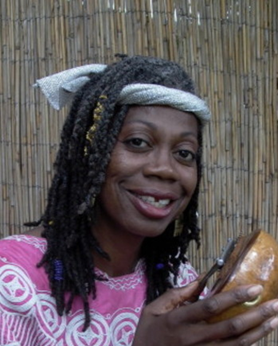
Opalanga Opalanga Pugh was an ordinary person with an extraordinary life, much of which she created and directed herself. Born in Denver, Colorado, in 1952, when people of color struggled against discrimination and limitations on their life choices, by 1972 she’d renamed herself after her Nigerian ancestors and begun her mission of storytelling.

Over six feet tall, chocolate brown, she carried herself like an empress. The gap between her front teeth, something that orthodontists would have wanted to correct, became a point of pride. In Africa the gap was associated with truth tellers.

That she was, but she couched the truth in stories, complemented by music and movement—from native peoples, from American culture, wherever a tale spoke to her. I once saw her speak to a group of some 75 women, mostly white and older. By the end of her presentation she was leading a line of all of us up and down the halls, around the rooms, in a joyous, joint celebration.

She said, “Who I am as a storyteller is one who is committed to the healing, the empowerment, and celebration of the human spirit. . .a Keeper of the Culture, a bridge-mother.” Known as a “griot,” a term and its variations used in West Africa for “storyteller,” she told her stories in ways that all peoples could understand and relate to.

She wasn’t with us long enough. She passed away in 2010 after a lengthy struggle, surrounded by close friends and family who had formed a network of support, provided day and night. Now those people have published, “When a Griot Dies,” a small book about her life, her journey, her spirit. Proceeds from its sale ($22 a copy) support the Opalanga Legacy Project, scholarships for all sorts of artists, keepers of the culture who honor her values.

“The universe is made of stories, not atoms.”—Muriel Rukeyser

For information on Opalanga, visit http://www.caringbridge.org/visit/opalanga
For information on “When a Griot Dies” or the Opalanga Legacy Project, contact Black Swan Books, opalangabooks@gmail.com ~ 303-366-4836