The Trouble with New Beginnings

apollo “You must change your life.” I’ve had this aphorism* as a screensaver, on my mobile, taped to the wall, and scrawled in various places for years. It’s an admonition to myself that things can be different, if only I try. Hard enough. 

That’s the bugger—try hard enough. As one year draws to a close and another raises its Medusean head, many of us think about our new year’s resolutions. I know when I was much younger, I’d labor over my list. I can recite most of them from memory because they appeared year after year: lose weight, study French, write a novel, save money and budget the rest, exercise by jogging and biking, exercise by stretching or dancing, catch up on photo albums, clean a cupboard/closet/drawer regularly. 

And like most everyone else, my resolutions lasted a week or two, then were cached until the next year. So I stopped making resolutions. 

The truth is habit does so much more to help us reach our goals than mere pledges. Years ago following a lecture by my dentist, I started flossing daily. The health of my gums skyrocketed. About four years ago, I instituted a daily writing regime and since them have tripled my output. Day after day, week after week, whether I feel like flossing or writing, I do it. And I’ve gotten results.

So this year I’ll look at my motto daily and think about changing my life. But I don’t have out-sized expectations. Transformations may be miniscule but they’ll be cumulative. And habitual. 

*From Rilke’s poem, ‘Archaic Torso of Apollo’: The poet, studying with the sculptor Rodin, gained insight into fleshy, solid, physical forms and applied these to his writing. Viewing this famous statue, he used it as an admonition to himself.

 

What’s a Family?

familyfriends2A generation ago, defining a “family” was easy. Husband, wife, children, occasionally along with close relatives as peripheral subjects. Today, not so easy. We have same-sex parents, single parents, substitute families that include friends, many families that include no children at all. I have to wonder if, in the past, we just ignored those people who didn’t fit into our template of “family,” for I know there were half-orphans and orphans as well as pairs of “good friends” whose exact relationships went undefined.

Now people are stepping up and speaking out to create their own families. The best definition I’ve heard, although the least exact, is a family is whatever we define as “family,” much the same as “art.” While this vagueness makes categorization a challenge to non-members of a family (so do I hug my second cousin’s roommate as if he were a blood relative or politely shake his hand?), and certainly hasn’t been adequately dealt with by insurance benefits officers, it seems a wise move in a time when we need every connection we can lay our hands on.

We no longer have tribes on whom we can depend to provide routines, rituals, safety nets. I have a number of single friends getting along in years who face difficult decisions about their own care as well as eventual disposal of their assets and ashes. Even more important for day-to-day living, who celebrates our birthdays and holidays with us? A Facebook greeting is an inadequate substitute for a glass of cheer. So we cobble together our own families out of whichever acquaintances have something in common with us and can tolerate us. And vice versa.

Which brings me to a novel I read recently about an unusual family comprised of an older sister who suddenly becomes her eleven-year-old half-brother’s guardian after the death of his mother. In Fin & Lady, by Cathleen Schine, set in the 60s and 70s, these two manage to create a real family, supplemented by three suitors for the sister’s hand, and eased by the relative wealth they’ve inherited. I really like novels that feature families, maybe because I’m still trying to figure out my own. The tribulations brother and sister face rise in the main from their own struggles to grow up and learn who they are, in the end trumped, as we all are, by the vagaries of dispassionate fate. If you’re looking for a book with fascinating, real characters writing their own life stories as best they can, this is it. It may give you hope about your own path.

I’d Tip My Wig to You, But I Haven’t Got a Wig

eliseMore and more people seem to be wearing hairpieces or wigs. Or maybe more and more people are wearing poorly made wigs. Walking out of a building today, I spotted a man with an obvious hairpiece. The piece was longish, all the same length (like a Dutch boy bob), and dark; but I spotted gray hair underneath where the hairpiece tilted a bit. I know other people with wigs obvious to the passerby. These folks must feel the accessory improves their looks.

But I wonder why someone would go to the trouble of buying a hairpiece that’s ill-shaped, poorly fitted, and whose color is at odds with the hard-earned traceries of time on the their faces.

Must be the wide-spread belief that gray or white hair makes you look older. Are wig-wearers so fearful of growing old—or looking old—that they’ll do anything to avoid it? Then why not dye it? Eleven percent of men and 55% of women color their hair, and you can be sure they’re not choosing gray.

Another option for changing styles are hair extensions, favored by public figures like Britney Spears, and not infrequently bedraggled or limp, and their close cousins, hair weaves. These usually are selected for the “beauty” they supposedly convey on the wearer.

Of course, there are lots of reasons to wear wigs that seem more legitimate than mere appearance: religious, health, diseases. But still the wearers are wearing wigs because they can’t or won’t tolerate nature’s dictates.

I have sufficient reason to participate. A young friend of mine guessed my age to be greater than my older sister’s, partly because my hair’s gray. But excuse me from the group. If I were really intent on fighting time, I’d do something about my hair; but I’m too lazy and too cheap and too devoted to simple comfort.

Not that there’s anything wrong with wearing artificial locks or coloring hair. Humanity has been doing it for millennia. If you have an inclination in that direction, go for it. However, I come down on the side of Chris Rock, whose documentary film “Good Hair” is a close look at black culture and the influence of society on young African-American girls. Natural hair is popularly believed to be unattractive, but Chris feels, and I agree, that natural hair tends to be a healthier, easier, more self-confident choice.

Plus, unlike wigs, natural hair won’t slip down over your forehead.

How to Get Organized and Disorganized

santa_lista
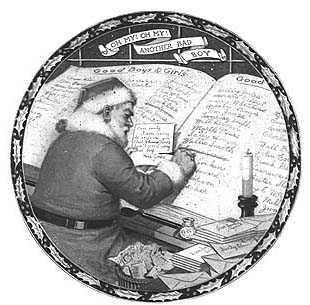
I’ve been a list-maker since childhood, and the holidays reinforce that character trait. Lists of gifts to give people, tasks to be accomplished, Christmas card recipients, presents I might like. But I’m beginning to realize that lists don’t necessarily make me more efficient. Rather, they force me to feel guilty. I’ve never been successful in crossing off every item on a list. In fact, the to-do’s seem to increase faster than the now-dones.

When I had a regular full-time job, my lists covered pages. I usually had one sheet per major project with sub- and sub-sub headings. Then, of course, I had the lists for home duties and the ones for other activities and writing. I experimented with keeping lists on paper, on a Palm Pilot when I still had one, on computer. Lists in various colors depending on type of task or in specially constructed tables and addenda to tables.

Since I stopped working for anyone other than myself, my lists have shrunk. But they still exist. Right now, I have four lists in my bag:
1. Items to learn about so I can use my tablet better.
2. Very old things I’m researching about publications or major household needs like photographing home valuables for insurance purposes.
3. Immediate needs, like finding a furnace maintenance business.
4. Kind of in between long- and short-term chores, like update my website and get the venetian blinds cleaned.

But then there are the immediate, don’t-forget-these-under-any-circumstances, such as birthday cards. These appear in my pocket calendar. And lists for special projects—marketing my fiction and organizing a volunteer effort.

I think list-making helps me feel I’m creating order out of chaos. If an item or task appears on a list, I don’t worry about forgetting it, and I can tell myself I’ll get to it eventually. Which I don’t necessarily. Hence, the guilt.

No reason to feel guilty if I apply one condition. The trick to controlling lists? IF YOU WAIT LONG ENOUGH, MANY OF THOSE LITTLE NOTES TO YOURSELF ARE OUT OF DATE AND YOU CAN THROW THEM AWAY. An example. Over months, I tracked down a writer whose work I admire, intending to send her a message. However, she’s quite elderly. If I wait long enough, she’ll pass away, and I won’t need to get in touch with her! Another example—transplanting herbs at the end of summer. I waited until the first freeze, which destroyed the herbs, and I now can drop that item!

Try applying this technique to your own lists and see if it helps you control them.

Keeping My Balance, or the Strange Case of the Woman With a Toothbrush Lodged in Her Throat

balance
Who’s the woman on the street corner lifting her leg to the front, side, back? Some urban looney? The victim of a new disease? No, I’m working to keep my balance.

I’m familiar with the hundreds, thousands, of experts and organizations who freely offer advice about achieving balance between work and family, mental and physical activities, spiritual and carnal desires. Stressed out? You need balance. Overweight or in poor condition? You need balance.

But another kind of balance is commanding attention in my life. It’s plain old body balance. Not falling down or over. Avoiding stumbles that send me tumbling to the floor. Being able to carry a tray of goodies without spilling.

Zumba dance class brought this concern front and center. Twenty years ago I could kick above my head without a thought, and a series of leg lifts like a Rockette was part of my routine. Then I realized that certain moves in Zumba routines are threatening me with disaster. These all relate to balance. Several quick thrusts alternating right and left limbs, even simply standing on one leg for a short period of time makes me shaky. Tremors run across my entire body, and my eyes cross as I try to remain vertical and stable. So I’m seeking ways to improve my balance.

Cars and pedestrians who pass me on my walks stare when they see me at a red light, for I’m exercising. Sometimes I practice when I’m stuck in line at the grocery store or post office. My latest effort, after reading advice from a 99year-old athlete, is to balance on one foot while I’m brushing my teeth. This is a true challenge, and I do worry my husband may find me one day with the electric toothbrush firmly lodged, but still vibrating, deep down my throat.

Another article with a trainer at the Y provided tips complete with photos in the Denver Post that I’ve tried to implement gradually. Start small with only a few inches of foot raising. Then add small weights or a ball to the routine. The pinnacle is perching on a stool or bar while holding barbells over your head.

I’ve been practicing semi-religiously for about three months with little improvement in sight. I’m getting so worried about losing my balance and injuring myself that it might be time to address the balances in my life concerning stress and worry. Once I do that, I’ll build up the courage to attempt the most challenging exercise: the half-ball, one-leg effort or Bosu ball. Just in case someday I have to traverse a road or hall with a surface constructed of globes, or I decide to join Cirque do Soleil.