New Beginnings––Are They for Real?

twwa125x166-1Nearly every headline I see this time of year makes a statement about new beginnings: “It’s a New Year––A New Beginning,” “New Beginnings––Jumpstart Your New Year” and on and on. I hear these words each year. Am I really starting over or just rewinding for a rerun of last year?

The opinions about fresh starts and new beginnings are as varied as the persons voicing them. Several years ago a wise suggestion came my way with a new perspective on this “new beginning” concept. Instead of focusing on a redundant resolution routine, how about taking inventory on what I’ve attempted, accomplished, achieved the previous year and then becoming intentional about improving in the new year?

Now that’s something I could grab and actually follow through all year long. My inventory items include:

      How many books did I read?

      How many new people did I meet?

      What events, experiences did I celebrate?

      What obstacles did I overcome?

      What new thing did I learn?

      What unfinished projects will I complete THIS year?

      Was I an influencer or an agent of change? How? For whom?

Each person’s inventory list will be as unique as his personality and creativeness allow. This approach to a new year energizes me more than staring at a list of resolutions that lose their luster by springtime.

By kicking off a new year with this method, I’m not excluding the past year, but instead building on it. My past is part of the foundation on which I will begin building this new year. As a writer, I’m always writing new chapters. Isn’t that what 2017 will become? Another chapter in my life’s story? How will it read by December 31st?

I do appreciate the opportunity to start fresh in January. It gives me the chance to ask “what if” as I peer into the months ahead. What if I stretched myself to try something new (rock climbing comes to mind for me this year)? What if I stopped talking about the next book I want to write and actually begin the outline and then sign up for a class on How to Write a Book in 30-Days?

The holiday hassles are past. Now is the time to change our tune from Deck the Halls to The Beat Goes On and get into the rhythm of the New Year and create New Beginnings.

What’s your “what if?”

“There are far better things ahead than any we leave behind.”

~ C.S. Lewisconnie

  By Connie Pshigoda

Connie is a natural health consultant with over 40-years experience, guiding her clients into healthy lifestyles and new beginnings using simple, real food seasonal recipes. Her award winning Wise Woman’s Almanac: A Seasonal Guide with Recipes for New Beginnings that Never Go Out of Season may be purchased on Amazon. Visit her at http://wellnessforallseasons.com

Kiss me, I’m Irish!—what are we honoring when we celebrate St. Patrick’s Day?

saint_patrick_window        Despite my name (and as far as I know barring furtive inroads in the night), I have no Irish blood or ancestors. However, I married a man who’s 100% American-Irish and soon I became steeped in the history, literature and outlook of the bold Fenian men and women who once struggled for independence and still support republican principles. St. Patrick’s Day, that annual reminder of all Irish, invites everyone in the US to become part of the fest, as I did. But what, really, are we celebrating?
Not green beer or rowdy parties. Neither fist fights nor silly hats. From St. Patrick and down through the centuries, the Irish struggled to break from traditional and abusive powers to establish new, sometimes radical, systems of government and society. They took centuries to create a separate government for a part of their island and homeland, at times educating their children under bushes because they were prohibited by the Brits from sending the kids to established schools. They were passionate about preserving their culture, their freedom, their self-determination.

Accomplishments accompany passion. History, indeed life and people around us now, support this idea. Many other qualities, too, such as hard work, creativity, and vision may be important. But passion drives the whole kit and caboodle. Those with passion might ignore the limitations of law, tradition, even human biology (think of Edison and da Vinci, notorious for short sleep cycles) to pursue their dream.

If we translate this passion into fervor behind a social movement, we see similarities. Those committed to their vision ignore deprivation, poverty, separation from families and friends, violence, imprisonment, even death. St. Patrick certainly did. And people can legitimately feel this decision is justifiable. The caveat: can this commitment cross the line from positive to destructive?

Terrorists are driven by zeal, but most of us agree they go waaaaay too far. There is a line beyond which violence and coercion usurp whatever good might occur from supporting their beliefs. A passion for what’s right, however that’s defined, a group’s protectiveness of its people and principles presents a quandary for any social or political unit working for change. Including the Irish. The IRA promulgated thousands of deaths and injuries while pursing their goal of an independent Northern Ireland.

I’ve pondered the question, “How far should someone go in defending his beliefs?” and decided I deplore all violence and coercion. Instances like 9/11, Sandy Hook, Isis attacks, Charlie Hebdo should not occur. Obvious? No. “The difference between a terrorist and a freedom fighter is a matter of perspective: it all depends on the observer and the verdict of history,” said Finnish environmentaist Kaarlo Pentti Linkola. And US Senator and presidential candidate Barry Goldwater said in 1964, “Extremism in defense of liberty is no vice. Moderation in pursuit of justice is no virtue.”

I disagree. This St. Patrick’s Day I’ll be ready to swap spit with those passionate about their principles, but not those willing to fall into violence and terror. I think Saint Patrick would be of the same mind.


Getting Edited and Editing

 Guest blog: Hear from a writer on the ups and downs of editing                 

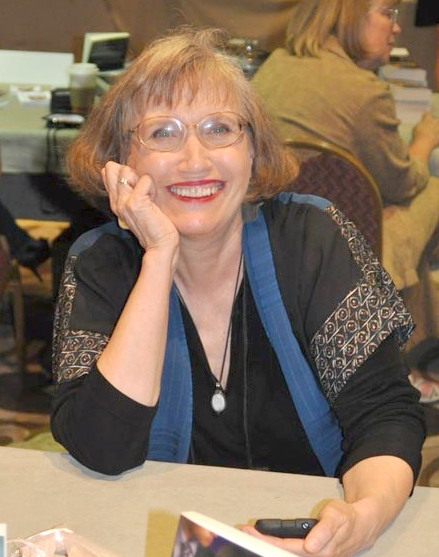
 meg_benjamin          By Meg Benjamin 

Earlier this year, Samhain Publishing, which bought my first book, Venus In Blue Jeans, as well as nine others, announced that they were closing. Like most of Samhain’s authors, I was saddened. I knew many people who worked for them, a very talented bunch.

But Samhain’s closure had a more immediate effect for me. It meant that my novel Running On Empty was no longer scheduled for publication. I could have tried to find another publisher; but the chances of anyone wanting to take on the third book in a trilogy where the other two books belonged to Samhain were slim at best. I could have let it go, leaving the trilogy unfinished, but I didn’t want to do that.

My third choice—and the one with which I decided to go—was publishing the book myself. Self publishing (or “indie” publishing) is increasingly widespread. An entire industry has sprung up for authors who want to present their own, professionally produced books, including experts in art, editing, and formatting.

Self-meg-benjaminpublishing involves two main expenses—covers and editing. Of the two, beginning writers are more likely to spend on the former than the latter. They’re making a big mistake.I came to this conclusion from a unique perspective—I was a freelance copy editor myself for several years. At one time I had large chunks of the Chicago Manual of Style memorized (note to fellow copy editors—it goes away with time). No way I would edit my own stuff.

On the simplest mechanical level, you tend to read through your own errors, even your own typos. You know what’s supposed to be there, and your brain supplies it even when it’s missing. But a good editor will do a lot more than just catch your mistakes. A good editor will tell you where you’re going wrong in your story and your characters. Editors come to the book cold, without any information about your struggles to get it finished (unlike, say, critique partners). More importantly, they’re not paid to be your friend. The editor is there to provide you with a flat assessment of the weak spots in your work, along with some hints about how to fix them.That’s what you want.

My editor was brutally frank about the highs and lows of Running On Empty, my newest book.I won’t lie—some of it hurt. The pain of criticism is necessary and frequently based on your realization that your work wasn’t as perfect as you thought. When readers complain  indie books are “unreadable,” they may be referring to works that haven’t received the benefit of an independent editor. I was able to produce a much better work thanks to my editor’s guidance.

Years ago, I was part of a critique group led by a well-known author. Group members ranged from rank beginners to seasoned, multi-published writers. A couple of the beginners had never been critiqued before, and they both responded with very public meltdowns. Eventually they both withdrew from the group after a loud denunciation of all of us for our lack of sympathy with their writing. Do I have to tell you that neither of those writers ever made it into print (at least so far as I know)?

Editing does cost a lot. Many editors charge by the word, and most of us write books in the 50,000 to 90,000 word range. But the investment pays off. Edited books may have weaknesses, but they’re usually things the author knowingly chose to do.

For better or worse.

(Meg Benjamin is an award-winning author of contemporary romance, including the Award of Excellence from Colorado Romance Writers. Visit her at MegBenjamin.com or facebook.com/meg.benjamin1. )


Do you have holes in your head, holes in your jeans, holes in your head AND your jeans?

jeansWith the exception of a brief period of time from age 15 to 24, I’ve never been a fashionista. During my teens and post-adolescence, finding my way among my peers, my attention to fashion seemed mandatory since it occupied a great deal of attention from my friends. Thereafter I focused on family and career, believing that style failed to hold the importance of those other areas.

I don’t belittle women who waste lots of time shopping, reading fashion magazines, and thinking about style. That’s their choice.

But one fad irritates me no end. I find it patronizing and ridiculous. That’s the decision to wear jeans with holes in them. Most frequently in the knee area, but also across thighs, calves, even buns, some with a combination of all three, and a greater or lesser amount of exposure. Usually called “distressed” or “ripped,” you purchase these already hole-y or you buy new ones and cut, tear and wear into the pattern of your choice. They’re usually worn with $400 high heels, leather jackets, and $75 manicures and pedicures.

There’s the rub. Believe it or not, there are people in this country and this world who can’t afford new clothing. They wear pants with rips, holes, and patches, not with self-satisfaction and preening, but with numb acceptance. Perhaps there are some who dress with pride in rags because they are triumphing over their circumstances. They know the importance of NOT defining themselves by the cost or condition of their garments.

Distressed pants coopt, embrace qualities like rebelliousness, individualism, populism. In the 60s and 70s, counter-culturists wore distressed jeans to recycle useable materials, to protest a consumerist materialistic culture, or to express their creativity through embroidery and artistic patches.

Most women wearing ripped jeans now have no idea what their appearance advocates. As they step adroitly out of the way of a homeless bag lady asking for a handout, as they toss money in a high-end store to purchase a piece of clothing that could feed a family in poverty for a week, they make a mockery of the realities of life for the poor. They insult people too broke to buy decent attire. My 12 year old niece might be excused because she’s still trying on personalities and interests. An adult woman? Not so much.

Are they a fashion or a fad? Fashion lasts longer and tends to emulate “prestige groups,” although some commentators see the process as a mutual exchange. Fads come and go quickly and tend not to originate in the elite. They’re ephemeral and follow the pattern of a craze, first exciting and capturing notice, spreading quickly, finally fading into nothingness.

In the case of distressed pants, a slap in the face of every needy individual in the world, we can only hope. You’re not fooling a soul. You’re neither fashionable nor socialist.

Every Table has a Story; But I Still Do Not Owe You an Autobiography

end_table_5_800(With this piece, I’m starting a series of guest blogs featuring other individuals’ extraordinary lives, stories and thoughts. Comments welcome.) 

My mother found a small table in the street. Someone had discarded it and she carried it home. Her friend the furniture store owner refinished it for her. She carried an end table across the alley from a friend’s house. One of the tripod feet caught on the gate and broke off. My father, exasperated each time that she brought something home, felt the need to bring its mate home for her. Again, her friend the furniture store owner had it refinished for her. Her incomplete sets of china with their beautiful cup and saucer or delicate serving platter also have their own stories to tell.

When I took my friend Kathy on a tour of my new home, before these pieces were able to find a more fitting place, she was mesmerized by the provenance of my home furnishings. Somehow, their histories added to their decorative beauty and value.

As I pondered on the intrigue that these stories held for Kathy, I began to think about the private tales each person has to tell. We all know that person who seems to have it all – beauty, brains, career, money, respect. We think that he or she never “suffered” in order to attain success. How many times does a celebrity make a public outcry that people do not know what he went through to achieve success?

For that matter, how many times does each of us make the same outcry? We do not have to be a celebrity to have people in our lives who do not know – or, acknowledge – our histories. There is the friend who tells you that you are so lucky to live in that house. There is the employer who tells you that you have not suffered enough for your job.

In order to get them to “shut up” we feel pressured to reveal every setback which we faced. The response to this revelation? Varied yet mechanical. There is the “thank you for sharing” response; or, the “stop feeling sorry for yourself” response; or, the “I don’t believe you” response. We are neither sharing nor feeling sorry for ourselves. More importantly, we have failed to establish a rapport or any understanding.

Unlike a table that cannot reveal its stories one by one to the other tables, as humans with brains and souls, we should have the opportunity to reveal our stories to other people – slowly and comfortably. Then, we are truly sharing.

Each of us has wonderful stories to tell, stories which can be woven into an extraordinary autobiography. Just do not ask me to hand it to you in one encounter.

Written by Carolina L., pseudonym, an attorney in Denver, Colorado. Carolina is originally from The Bronx, New York which is fertile ground for many stories.