
About Bonnie McCune

Bonnie is a Denver-based author whose interest in writing led to her career in nonprofits doing public and community relations and marketing. She’s worked for libraries, directed a small arts organization and managed Denver's beautification program. Simultaneously, she’s been a free lance writer with publications in local, regional, and specialty publications for news and features. Her main interest now is fiction writing, and her pieces have won several awards.

Who’s the Old Bitch Now?

old woman Me. Never thought it would happen. When I was young, I’d see old women in non-action at committee meetings and on the job, even in my family. I always had two questions about them.
1) Why did they apply rouge or blusher in bright blotches on their cheeks? And,
2) Why were they often so grouchy?

With age comes wisdom. Sometimes. Or in this case, at least answers. I’m here to tell you that old ladies apply uber-color on their cheeks because their eyesight isn’t good. They can’t discern how heavily they’ve applied it.

As for the grouchiness, this, too, appears to be a function of aging. I’ve lived and learned. The older I get, the more impatient I am with people who have yet to understand the things I have. For example, a group planning an event refuses to prepare a detailed list of responsibilities and assignments. When essentials are overlooked and supplies go missing, my inclination is a motherly “I told you so.” A young friend delivers a lecture to me about packing and scolds that miniature lotion and shampoo are unnecessary. I crow after my return and report the number of hotels failing to provide these essentials.

This extends into public issues and creative efforts. Politicians of all stripes forget what has preceded them, ignore the many solutions that have been implemented in the past, insist on re-visiting the same old debates. Writers believe they’ve uncovered secrets of the universe when a little research would show just how over-used an idea is. Artists brag about their individuality when a visual style is actually a return to days gone by.

Of course criticisms about inexperience and immaturity could flit through my mind and not out my mouth. But maturity also makes me aware that time is fleeting. I don’t want to waste energy and effort being diplomatic. If I blurt out my opinion, get to the heart of the matter without fussing around, I’ll save precious minutes. Unfortunately, I might offend some people in the process.

So before you wonder, “Why is she such an old bitch?”, pause to consider the words of George Santayana (and others who’ve said nearly the same thing), “Those who cannot remember the past are condemned to repeat it”. Maybe you can actually learn something from someone older than you.

On the other hand, you could remind me, courtesy of Kurt Vonnegut, “We’re doomed to repeat the past no matter what. That’s what it is to be alive.”
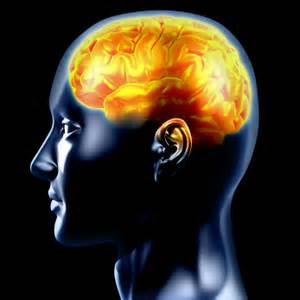

How Do We Know What We Know Is Actually What We Know?

brain Or. . .how on earth can anyone believe such-and-such a pea-brained theory? That candidate? That idea?

Has this thought ever crossed your mind? The answer is that a great deal of our responses to life around us, our reactions to other people and events, even our memories are pre-programmed without our awareness.

Dozens (perhaps hundreds or thousands?) of studies exist that substantiate this point of view. Fortunately we don’t have to go in search of them. Author/physicist/screenwriter and all-round Renaissance guy Leonard Mlodinow has gathered them for us and relates them in fascinating and readable form in Subliminal: How Your Unconscious Mind Rules Your Behavior. You may be aware of the term “subliminal” from introductory psych class, the concept that we can be influenced by messages below the level of our cognizance. In the 60s ad agencies and businesses were enthralled with the idea that the robotic masses could be persuaded to buy more popcorn at movies or a certain brand of liquor, just about anything by flashing words on a screen, or hiding sexual images in print ads.

Mlodinow is waaay beyond that. Some of the points:
• No one’s memory is or can be perfect. Our brains fill in the gaps for us automatically. So two people can hold strong opposite views of a happening and be absolutely convinced they’re right. Remember that next time you have an argument with a friend or lover.
• Our brains filter any information we receive and skew it to support or oppose views we already hold. Hence the battles royal over gun control. This isn’t deliberate stupidity on anyone’s part; it’s our unconscious.
• Senses, like sight, smell, and so forth, also plug the blanks in our perceptions. An example, the stock market is more likely to turn upward in sunny weather, and the type of music played in a liquor store affects the sale of wines by nation of origin.
• Touching someone (even lightly and without his knowledge) makes that person’s perception of you more likely to be positive.

Subliminal, from the unconscious part of the mind, is different from subconscious. While psychologists and others may brangle over exact meanings, suffice it to say that the unconscious contains courses in the mind that occur automatically and that we cannot access.

So what does this mean? As a writer, I find this type of analysis helpful for creating and explaining my characters’ behavior.

As a person, I react exactly as predicted. I’ve always believed that people can be of good will even if they hold beliefs diametrically opposed to me. I have a friend who quite honestly feels that no Republican has the best of intentions. Literally absolutely none. But I don’t agree. My perception of reality is supported by what I already unconsciously believe. And we’re both right, according to Mlodinow and ourselves.

A Kiss Is Still a Kiss

eBook reader with girl_360 The fundamental things apply, says the old song, “As Time Goes By.” And this seems to be true of book reading, too. A book is still a book, regardless of its shape or format. USA Today and various studies used in its articles are tracking book reading by electronic and hard-copy means. They say that owners of e-readers and tablets actually increase their book buying. Other trends are those to be expected: younger people use electronics more, and they tend to discuss their choices more on social media.

What does this mean for the book world at large? Predictions of the death of the book are waaay premature. The packaging of books is certainly changing. Marketing may be a bit harder because mass media like newspapers are devoting almost no space to books. But word of mouth, always the most important method to convey your excitement about a book, continues very strong, actually enhanced by social media.

How much can we believe reports like this? Seems like every study on the positive side has a matching study on the negative, like the one from the National Endowment for the Arts. While 54.5% of adult Americans say they read a book voluntarily in 2012, the percentage who read a work of literature went down from 50.2% in 2008 to 46.9%. As usual, women are far and above bigger readers than men.

My own theory is that the public has much more access to books and reading material nowadays than any time in history. In early centuries, many people were illiterate or close to it. Even as you approach contemporary times, reading wasn’t necessarily an activity for everyone. My maternal grandfather dropped out of school in the eighth grade to help support his family, and I’ll bet many people have ancestors who were in the same boat.

Despite hysterical predictions that reading is going to die out, people use these skills all the type, just electronically. Plus consider this—maybe too many people are reading. Maybe we should be restricting or discouraging access to books, since people seem to be picking up some hair-brained ideas from it. Perhaps we should aim for only 25% reading decent literature, if they’re the right 25%. Of course, those individuals should be only ones who agree with me.

No Good Deed Goes Unpunished

park-90476_640 Several days ago while going to meet a friend for Happy Hour, I drove through a nearby park. The changing fall leaves, the sun setting over the mountains on the horizon, the wide expanses of lawn were perfect for the mild weather. No season can beat autumn in Denver, and nothing in particular crossed my mind.

Until I spotted the grungy man crouched on the curb by the bus stop. Unkempt men, and the occasional woman, are not uncommon in this park in the central city, and town dwellers usually follow the “live and let live” mandate. But it was obvious this fellow was in trouble. He was mumbling to himself, swayed in all directions, and obviously couldn’t stand unsupported; so I pulled over and called out the window. “Do you need help?” “Yes” was the answer.

At 6:10 I dialed 911 to report the incident. When given the choice, I said the man appeared to need detox more than a regular ambulance. As evening fell and the skies grew dark and temperatures dropped, I waited. And waited. And waited. I made two more contacts to 911 (changing the request to an ambulance as it seemed that might respond more quickly), while a young couple on an outing with two children also called.

Compounding my frustration, on my second inquiry, the operator scolded me for “shouting.” Sorry, but when I’m worried, upset, and frantic, my voice goes up, a not uncommon reaction. It was obvious to me that this operator (and others I’ve encountered) lack elementary training in human responses to frustration.

The man muttered and swayed, sometimes seeming to communicate, others not. Vehicles, now with headlights on, sped by. Real concern that he’d struggle to his feet and land in the street to be run over made me linger. (Advice in these situations is to never leave the person alone.) Finally, at close to 7 p.m., more than 45 minutes after the first call, the emergency personnel showed up. Yes, they answered my question, detox incidents take lowest priority.

Why did I bother to stop? I’ve always felt people have an obligation, a mutual trust, to help one another. That’s what makes us human. I also made a personal pledge years ago not to wait for the other guy to act. (See “My Family of Heroes”) Guess I’m not too old to learn different.

My mistakes:
• Identifying the need for detox rather than medical.
• Hanging around to insure no one ran over the man.
• Believing that emergency personnel are supposed to respond in a timely manner.
• Stopping in the first place.

I spent the rest of the night depressed and angry. I don’t want to believe that life and death don’t matter except to the victim. I don’t want to agree with pessimists that government can’t manage any service efficiently and humanely. I don’t want to assume that individuals who are poor, homeless and substance abusers are worthless.

But following my recent experience, I’ve got to think about it.

East, West, Home Is Best, But Where?

When I walk to the Y to exercise, I sometimes pass people on a corner next to a church. By and large male, they are also scruffy, stinky, poorly dressed. They block the sidewalk with their duffels, backpacks, bikes, grocery carts. They gather on this particular corner because the church distributes free sandwiches at lunch. These are the homeless in Denver, but they could be anywhere (http://www.ibiblio.org/rcip/research.html).

My initial feeling whenever I pass, or try to pass, is one of annoyance, for they block access to the sidewalk, spill over to the parking strip, perch on stairs, walls and courtyards, blow cigarette smoke hither and yon. Some have dogs as mangy as themselves, many tote items that should be in junkyards—a frayed and torn sleeping bag, a shower head, a battered water jug, rope, a small ironing board. I wonder why the church officials or city authorities don’t demand compliance with public nuisance ordinances or common courtesy.

Then I question when and how I moved from sympathy or even mere apathy to hostility. These are people with no roof over their heads, few resources for health care or decent food, little access to opportunities for learning and entertainment. They don’t ask me for money or any sort of help. All I have to do is side-step them.

I don’t categorize myself as a “bootstrapper,” those who claim the homeless should just pull themselves up by their bootstraps, as if they even had boots with straps on them. Perhaps I’m getting numb to social problems. Perhaps I’ve seen too many programs to help the indigent and ill that fail, or I’ve listened to too many leaders claim they have the solution, and that never happens. Perhaps I’m tired of even thinking about the issue of homelessness. Perhaps I’m sick to my stomach at the thought that a country as blessed as this one cannot and will not care for those who can’t manage on their own.

As I sit in my home and consider, I realize what I feel is remorse that I can’t fix the problem. When I pass a homeless person, I can’t avoid the collective guilt we all share, whether we admit this or not. So I choose to be annoyed, not accountable.

(One group trying to do something is the Colorado Coalition for the Homeless, http://www.coloradocoalition.org/)