Bonnie is a Denver-based author whose interest in writing led to her career in nonprofits doing public and community relations and marketing. She’s worked for libraries, directed a small arts organization and managed Denver's beautification program. Simultaneously, she’s been a free lance writer with publications in local, regional, and specialty publications for news and features. Her main interest now is fiction writing, and her pieces have won several awards.
When I look at one particular photo from my childhood, it captures my family perfectly: Disneyland, 1950s, planted on the edge of a circular planter. With one hand, my mother grips the stroller containing the current baby (there always was a new one), staring off to the right. The kids strewn to her side, also sitting, probably for fighting or misbehaving, each of us looking into the distance, not at one another.
Way over on the left, separated from the rest of us, my grandpa. The fedora hat he always wore, even in the California heat, alone, isolated, also staring off. My father, the one behind the camera, trying to capture visually what he always sought emotionally, and never succeeded in finding—the perfect happy American family. I can almost hear him saying, “Okay, everyone, smile,” as he stretched his lips in a grin, pointed his camera and shot.
Leo Tolstoywrote, “All happy families resemble one another; each unhappy family is unhappy in its own way.” I don’t know if I agree. Nothing in life is that simple, especially as I grow older. I started thinking about families when reading an author who’d entered some hyper-critical observations on his own father—his over-protectiveness, his predictions of failure. I imagine that dad wanted to protect his son. I now know after having children and grandchildren of my own that most of us simply try to do the best we can.
At times, if I imagine one of mine in danger, or hurting, or discouraged, the love I have swells inside me, like yeast doubling, tripling in size until it’s about to choke me. I have to think my parents had the same response, even if I didn’t know then.
There’s much more to the photo of my family than just an image of people together on outing. Separate, isolated, roiling with emotions that at least some of the time were resentful and angry. There’s much more to the stories those people lived: my mother, abandoned by her mother before adolescence; my father, whose first wife died in pregnancy, leaving him with two little girls to raise; several sisters still to face death, poverty, disappointments in their lives; brothers with their own challenges.
I’ve avoided writing about my family for years because it hurt too much. Was my family dysfunctional, or simply normal? Life can’t be happy and smooth all the time. What hurts the most is my inability to change myself in the past, compensate for my shortcomings. Perhaps it’s time for me to stop running away. Time to honor those people for being themselves, doing their best. Acknowledge the closeness we had, what we brought to one another, and, yes, the love we felt. But whether to use memoirs, essays, or fiction, I don’t know yet.
Science fiction is a genre chock-full of stereotypes. Doesn’t take much imagination to throw in an alien monster or launch a barrage of special effects through images or words about explosions, fires, and destruction.
Then there are the few thoughtful works that hold a mirror up to us and show us the real horror we are or could become. Such is the case with Parable of the Talents, the second book in Octavia Butler’s duet of the near-future. The time is about 2035, the society is ours, gone slowly and terribly astray, like TS Elliott’s vision in The Hollow Men. “This is the way the world ends, not with a bang, but a whimper.”
Published in 1996, the book comes sooooo close to many happenings today. Slaughters in Africa and the Middle East; hidden concentration camps of low-income workers and their families tacitly approved by governments; discrimination against the poor like we have in our country; pronouncements by rich or powerful individuals blaming the powerless for their own situations; disappearances of people that challenge the system; arming of the citizenry; ambitious individuals who bend the truth, even lie, as they set up tar-babies as objects for hatred, using politics or religion as the excuse; brutality against women and helpless. While all these evils don’t occur in any one location, they are present in the world today.
Protagonist Lauren Olamina has moved, escaped, from LA with her doctor-lover, to establish a tiny community in northern California. There they struggle to raise crops, build homes and businesses, and occasionally fight bad guys and rescue a few from the huddled masses. But they can’t escape the evil of authoritarian—or greedy?—do-gooders who want to wipe them out. Lauren’s husband, friends, and neighbors are killed, her infant daughter snatched from her.
Fortunately, steeped as the novel is in religious ideas of one sort or another, one holds some promise. Lauren’s vision of spirituality is a philosophy called Earthseed. It preaches acceptance, tolerance, and community purpose. Despite a vision of the future so close we could turn the corner and be living it, optimism is possible.
Butler, an African-American woman who won numerous awards, including a MacArthur “genius” grant, was unusual in the scifi field. Unfortunately she died in 2006. Although she’d planned additions to the series, none were published, as far as I can tell. I keep thinking, wondering, what she would have thought about Obama’s election, about the mouthings of politicians who think (or at least claim) they have all the answers, the attacks of some against public education and tolerance. Equally, what would she have thought about wave after wave of extremist, violent terrorism launched in the name of God, regardless of the affiliation or country of origin of proponents.
I’m sure she would have laughed about the popularity of zombies, vampires, robots, and other easy-to-sketch villains. She knew that the real horrors of the future lie within humans themselves, and she warned us as best she could while she encouraged us to think about the consequences of our actions. . .and inactions.
I was clipping my toenails today when I realized bending over to reach my toes has become a challenge. As I’ve aged, and maintained fairly reasonable health and condition, a number of actions are simply more difficult. There hasn’t been one “ah-ha” moment, rather a growing awareness. Incidents occur when I catch myself asking, “Why am I panting at the top of three flights of stairs?” or “Where is my waist disappearing to?”
Questions to my doctor give me no real answers. If nothing pops up on a medical test, such as blood counts or EKGs, he and I tend to blame problems on aging. Minor aches and pains, slower reflexes, stiffness, less flexibility, even thinning hair. Yes, these are consistent with my image and information about advanced years.
And yet, the last time I remember becoming so bewildered over my body’s responses was in adolescence. My girl parts became sensitive, I was awkward and clumsy, my physical responses took erratic control over my brain. I didn’t know when I’d blush or start hyperventilating. Don’t even ask about my intense and unpredictable emotions.
Can it be that becoming a “mature” adult is as earth-shaking as adolescence, at least physically? Certainly seems so. I’m not referring to body image, if I think I look fat or wrinkled or ugly, but to the reality of my automatic responses.
My inclination is to try harder, reach higher, breath deeper. If there’s a limit, I need to push the boundary. And this instinct appears to be valid. As I’m lifting weights in the gym and telling myself to cut the set short, I remember the 77-year-old woman I saw on television who took up weight lifting five years ago and is as cut and taut as a 35-year-old athlete. If I forget my best friend’s name and want to excuse the lapse because of diminished memory, I recall advice from specialists to develop compensatory methods to cultivate my skills.
“Getting old is hell,” my grandfather used to tell me. Little did I know how accurate he was. I wonder where the wrinkles came from, why my height is decreasing. Our culture is no help at all. We’re so engrained with the belief that youth-beauty-skinniness is the ideal, we find an alternative nearly impossible to develop. A friend recently told me about an old lady, an Alzheimer patient, who walked the halls of her care facility, greeting all and sundry with the statement, “I’m so ugly, why am I so ugly?” She probably had been surprised by her image in the mirror.
Never having grown taller than five feet and never being skinny, I long ago gave up delusions of meeting some beauty ideal. Still I’d hoped to have more control over my body’s responses to the world around me. I’ll try to consider this stage of life as similar to moving through being a teen. When I finally adapt, I’ll have learned from the process and be ready for new insights.
My heroes have always been writers. While other kids were moaning and groaning over sports stars or film actors, the latest gyrating band or skinny super model, I idolized those who created worlds in their minds. To open a book equated to prying open the door to a new existence.
This trait protected me in one way. Sure, I paid some attention to fashion, makeup, and culture pace-setters; but not nearly as much as most. I was the first woman I knew to abandon elaborate hair-does. To this day, I refuse to spend an inordinate amount of money on clothing or tickets to concerts. No one can impress me with a fancy car. These things just don’t matter to me.
I also was fortunate that my dream was achievable. With a minimum of skill and a whole lotta work, I had a chance of becoming a novelist. Too many are the number of young lives crushed in the deadly search for fame—or at least a living—in the performing arts. The lucky ones eventually switch to a more fulfilling career, like selling cars or running a restaurant. And those whose exemplars are in sports know their time is limited to their physical prime.
When I decided to give up a regular job, rather when I was fortunate enough to be able to do that, and did, indeed, begin to publish novels, I anticipated congratulations from everyone. Maybe ripples of attention through organizations to which I belong. Mention of my ventures whenever I was introduced.
Guess not everyone is as starstruck over writers as I am. Certainly good friends understand the long road I’ve traveled to reach publication. But the rest of the world seems as intent as ever on hero-worship of empty-headed reality stars and steroid-popping athletes. Even worse, copying their behavior and mouthing their standards.
I’ve learned “fame” doesn’t accompany achievement of my goal. Furthermore money hasn’t been an objective. That’s fortunate because I’ve made almost none. The actual return on the endeavor has been to substantiate a maxim I heard but never really understood. “It’s the journey, not the destination.” I’ve gained so much from writing, and I’ll consider this at another time.
At first I gave little thought to the person behind the works. I assumed if I adored someone’s writing, I’d like to know the individual. Brushes with some self-centered and idiotic authors soon relieved me of that delusion. There’s a big difference between a writer’s work and his life. Charles Dickens ran around on his wife and finally abandoned her. Norman Mailer stabbed his wife. Katherine Anne Porter had a miserable love life and miscarried several times. So achieving authorhood doesn’t mean you’re happy or fulfilled.
Does this mean heroes, mentors, idols are delusions? Not necessarily. Yours may be delusions or meaningless to me. Do we need them? I think we do. In addition to a few moments of escapism as we dream of a hero’s fantastic life, we can continue to adjust our views, hopes, goals, and dealings by what we know of people we admire. As long as we know anyone, including ourselves, Lance Armstrong, or Bill Cosby, can have feet of clay.
I feel depressed when I read those notices in newspapers or chat with others about people’s multiple accomplishments. Compared to me, everyone in the world seems to be a raving success. They publish several novels a year, start businesses, win awards, are asked to speak at conferences and, even more, get paid for it! They run marathons in their spare time, make the “top ten” list in whatever subject interests them, say cooking or astronomy or cup-stacking competitions. Even worse, they write, call, email and blog about what they’ve done, to the point I want to avoid meetings and acquaintances, reading my mail, or communicating in any fashion, even smoke signals.
Maybe you’re challenged or energized by such information. Not I. When I was a kid, I fell for the Great American Dream. Anyone can be president or a millionaire, if you just try hard enough. I’ve learned that’s not true. Take my primary interest: writing books. UNESCO reports more than 300,000 bookswere published in the US in 2013 (fiction and nonfiction, as well as new editions of old books). I can’t name 3000 people I know, let alone 300,000 or the books they might read. I may have owned 10,000 books myself over the course of my life. Realistically, the odds of me or anyone selling tons of books are miniscule. In the realm of fantasy, everyone’s doing it.
I have a friend with an even more aggravated sense of inferiority than mine. Take her to a group in which friends mention their thriving children or a promotion on the job, and she refuses to see them again. I try to tell myself to be realistic, my life is going fine. But the sounds of all these folks beating their own drums and tooting their own horns makes me deaf and discouraged.
A change of attitude seems required. I’ve heard about two studies on the secret to happiness. One claims that people who are mildly self-delusional are happier than realists. The young woman sashaying across the club floor thinking all eyes are on her is more contented than the model who constantly seeks flaws in her appearance. So, for example, if I decide I’ve written the very best novel in the world, I’m better off believing that than comparing my work to National Book Award winners.
The second study says those with low expectationsare happier than individuals with high expectations. That means my approach to getting published years ago, when I assumed I’d eventually win the Noble Prize for Literature, was almost guaranteed to make me frustrated and discouraged; whereas a writer who never expected any work to appear in print is overjoyed to produce a chap book of her own poems.
Since today, the day I’m writing this, heralds a new year, here are my resolutions:
* Talk myself into mild self-delusion, that I am, in fact, climbing mountains, achieving wonders, and becoming the best (if not best-selling) author in the world;
* Set my expectations in every arena very low. Rather than striving to lose 30 pounds, shoot for one. No more trying to write every day; a couple of times a week is fine. Forget hoping for world peace, a pleasant “good morning” from a neighbor’s fine.
Then I’ll be out bragging, tooting my own horn, and endlessly broadcasting on FaceBook, Twitter, Pinterest, whatever, with the best of ‘em.
 When I look at one particular photo from my childhood, it captures my family perfectly: Disneyland, 1950s, planted on the edge of a circular planter. With one hand, my mother grips the stroller containing the current baby (there always was a new one), staring off to the right. The kids strewn to her side, also sitting, probably for fighting or misbehaving, each of us looking into the distance, not at one another.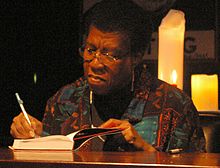

 My
My 
 Bonnie McCune, author