About Bonnie McCune

Bonnie is a Denver-based author whose interest in writing led to her career in nonprofits doing public and community relations and marketing. She’s worked for libraries, directed a small arts organization and managed Denver's beautification program. Simultaneously, she’s been a free lance writer with publications in local, regional, and specialty publications for news and features. Her main interest now is fiction writing, and her pieces have won several awards.

WHY DOES EVERYONE FEEL COMPELLED TO DELIVER LECTURES AND ADVICE AT ANY TIME?

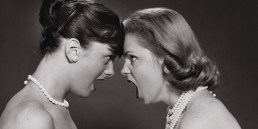
 Two teenage girls fighting

An accidental collision in the Target parking lot introduced me to a young woman. I was at fault, and admitted it; we exchanged contact information, then departed. ‘Nuff said? Oh, no. A few days later I received an email chock full of her instructions, couched not in sympathetic terms, more like a lecture from a study hall monitor.

           I should have checked behind myself more closely, could have asked if she’d been injured, surely would have been in trouble with the police had she reported the incident. Although relieved she hadn’t accompanied the tirade with an abundance of swear words (“fuck” being the operative term for anyone under the age of 45), amid my irritation at her gall, I wondered when the standard operating procedure has appointed every person with an opinion as an expert compelled to tell all and sundry what they’re doing wrong.*

          Whether it’s the food we eat, our personal care habits, or our politics, someone is sure to tell us we’re headed for disaster. The role of judge used to be reserved primarily to parents, clergy, military superiors, and, of course, judges. Now everyone’s an authority and ever-vigilant to deliver advice, whether requested or not.

          One person points out the extreme dangers I’m courting when I drink an artificially sweetened soda. Another lists the impacts of GMOs on my health. My granddaughter knows I should be using special lotions for face, body, hands, and feet, and tells me so. My 4-year-old grandson shouts direction about how I should be driving and parking. On television a cacophony of ads bark the advantages of various health treatments, often in conflict with each other, which they warn against. In a meeting to plan an event, each person argues for a different agenda, speaker, budget. On a larger level, the same scenario plays out over issues such as oil development, political parties, even religion. Everyone is absolutely right at the same time totally wrong.

          Is this simply the way we now function? Some believe Americans are so self-confident, they may feel they’re all-knowing and always correct. That’s not the point. To quote Isaac Asimov, “People who think they know everything are a great annoyance to those of us who do.” Know-it-alls are irritating and rude. I can overlook that in my friends, who have positive qualities and are speaking with the enthusiasm of religious converts dedicating to educating me. Not from a woman in a parking lot one-third my age and experience with not a glint of information about my qualities and state of mind. Not from the supporter of a candidate who believes he can solve problems I don’t even agree are problems.

          Truth is, no omnipotent judge sits in the bar across from Loudmouth and me who’ll select the winner in a drunken debate. No absolute rights and wrongs in this game of life. Coming from a contentious family in which every member has more strong opinions and inclination to argue than sense or good will, I had to fight my natural inclinations before I stumbled on a new perspective about opinions. The more you talk, the less you’re listening. The more you lecture, the less you’re assimilating. While a lively debate can be fun, rarely does progress occur.

          I’ve discovered I can shorten the amount of time wasted in futile conversations, lower my own blood pressure, perhaps even learn something if I shut up. Plus I can then feel morally superior to my opponent. I like to think I’m helping improve the general tenor of society.

“I am the wisest man alive, for I know one thing, and that is that I know nothing.” Socrates.

Is cross-genre writing like cross-dressing? Yes! The benefits and attraction of cross-genre writing for readers and writers


dystopia manThe trouble with categories for books? Like categories of humans, as soon as you slap a label on a book, you limit it. People tend to avoid it unless it’s a genre they read. Of course many books, like people, don’t fit neatly into a pigeonhole. A major category, and one that some readers are uncomfortable with, even avoid, is literary. They assume the language will challenge them, the plot won’t flow.

You deny yourself a great deal of reading pleasure if you avoid literary work. On the flip side, you deny yourself a great deal of reading pleasure if you avoid genre work because you approach it with preconceptions. I’ve found some of my favorite novels are cross-genre, frequently sci fi or speculative with literary. Margaret Atwood’s The Handmaid’s Tale is an example.

You increase your reading pleasure when you sample cross-genre writing, a hybrid of themes and elements from two or more genres. Often stimulating, it presents opportunities for creativity in writing as well as discussions among readers.

A new-ish, genre-leaping novel is Station Eleven by Emily St John Mandel. This 2014 work shouldered its way into notice via a list of awards as long as my arm, including the Arthur C. Clarke Award, finalist for a National Book Award and the PEN/Faulkner Award, 10 Best Books of the Year by the Washinton Post and others.

At this point, dystopian novels are as common as situational comedies on television. For many of us, our vision of the future looms grim, which might account for the popularity of the genre. I still enjoy a number of them, but a book has to possess outstanding writing for me to rave on about it.

This one succeeded not because it was more violent, bloody, action-packed, sexy, or even original. Mandel’s writing style appeals to me. She juggles numerous characters, leaps back and forth in time, switches voices, and encourages speculation from her readers about what has happened and might occur. No space aliens, nothing outside the realm of possibility. A new virus spreads rapidly over the world, killing 99% of the population. The remainders group together in new ways, intent on sheer survival, most of those the book follows eventually tied together in some manner. Mandel’s language is clear yet evocative; her control over her material, stunning. I ended the novel depressed over the world it created but in awe of the journey.

Readers and writers thrive on outstanding writing. It can be traditional or innovative in approach, of a genre or genre-crossed. Don’t miss this one.

Adrift with no connections or support. How will I function? Am I addicted? Four days without the Internet.

woman-screaming-at-computer-shutterstock_119635360Return with me now to the thrilling days of yesteryear. No, not the Lone Ranger, for those of you mature enough to remember that show. But to pre-Internet days.

For four days recently, my Internet connection was down. Frustrated? Yes. Unproductive, friendless, and isolated. No.

After I’d clicked on every piece of equipment in my possession designed to link me and the world at large, then discovered no signal, I panicked. What would I do? How could I work?

I admit pretty much every time I reached for a piece of information, be it a phone number, confirmation of a fact, or the weather report, and couldn’t get it instantaneously, I grumbled mentally. Particularly when I needed to confirm meetings with several people, or actually hold a meeting via Skype, my dissatisfaction increased. But I survived. I visited several locations with free Internet to catch up on essentials.

As I sought alternative methods to figure out when a snowstorm would hit, I wondered what people think Internet access is doing to us. Some are concerned that too much Internet reduces the deep thinking  that leads to true creativity. Was I more creative without the Web? I don’t think so. My connections always seem to spark more ideas and exploration. However, I believe I got more actual, productive work done during the hiatus.

Then there’s the theory people who are socially anxious are more likely to use electronic communication so they can avoid interaction. I don’t know if I qualify as socially anxious, but I definitely use email to avoid extended conversations and control the content. During the interruption, I had to use the phone which I hate to do. So only a few people heard from me, which probably was appreciated by all.

During times of crisis, such as the terrorist attack in Paris, I know I’d miss access the most. With television and radio, I can’t search for exactly what I want, and I feel inundated by uncontrollable floods of terrifying pictures and reports.

On the whole, my involuntary exclusion went well. I didn’t have withdrawal symptoms; it was kind of nice not to feel pressure to interact constantly. I missed little but the ability to look up word definitions immediately as I’m reading a novel, but little else. Still I felt out of sync with the rest of the world, disconnected. I was on the dark side of the digital divide, one, we’re assured, creates an unbridgeable gap and marks the adult needy as surely as a poor child is labeled by being eligible for free school lunches.

To avoid landing in the situation in the future, I know what’s inevitable, I’m forced to be dragged kicking and screaming into the next stage of my techie progress—perpetual connection via a smart phone.

How I Learned About Bullying at an Advanced Age and What I’m Doing About It

bullyL2810_468x350The trouble with bullying, it’s hard to identify. We picture a ring of kids taunting the girl in shabby clothes or a huge monster looming over a scared skinny boy or the superior snotty rich guy with a nasal whine belittling the scholarship teen at school.

But is teasing an acquaintance about her new haircut bullying? Threatening to rear-end the driver who cuts in front of your car when you know you’ll never follow through? How about sending a series of text messages laden with ominous warnings to your business competition?

Like nearly everyone else in this country—except the bullies—I condemned bullying; but I’d never been the target of it. Until several weeks ago. A person on my street, whom I refuse to call a “neighbor” because he isn’t neighborly, became my personal bully. How did I know?

My body’s reaction. When he came over and began to yell, storm, and swear, my instinct told me to run or hide. Since I couldn’t do either, my autonomic nervous system went into overdrive. Every muscle clenched, my breathing increased, my intestines clutched, and I could hardly speak. Many people don’t react this way, but I’ll tell you, it’s hard to take action of any kind when your body’s automatic response to conflict and fear is to shake, run, or puke.

While a number of websites and experts address bullying as only an issue in childhood, it can occur any time. Merriam-Webster defines a bully as a blustering browbeating person; especially :  one habitually cruel to others who are weaker.

What had I done to cause this? Nothing other than come down the stairs and ask a question. This particular person decided he disliked me the first time he met me, and his negativity has escalated with each contact, for reasons unknown to me. Since my immediate response to aggression is terror and guilt (think of the stereotype of a rabbit), I became the victim.

The wrong response. Experts advise you can’t make a bully like you even if you do back flips. (Although I didn’t try that, not being able to perform back flips). You must change how you respond to the bullying. In other words, amend your response. Bullying doesn’t have its desired effect if the intended victim successfully stands up to the bully. Once you have identified a bully and know what to expect from him or her, you must choose not to be a victim. Take a stand and be firm.

Easier said than done, especially in this day of random violence, instant rage, and self-obsession. The advice: the victim’s anguish, fear, and dread get in the way of a successful defense. Because bullies often choose targets who appear unable or unwilling to fight back.

I was surprised my bully has so much hostility since I look harmless, feel harmless. I’m 20 years older, 30 pounds lighter, 8 inches shorter. Maybe that’s WHY he picked me, because he knows he can lord it over me.

That’s how at a very advanced age, I finally learned about bullying. Not by observing my children or grandchildren. Not by watching news coverage. Not by reading written accounts of it. Through actual experience.

However, I knew I had to refuse to let him control my behavior. If I ducked into the house every time he made an appearance or if I stood on the sidewalk yelling obscenities at him, I would be allowing him to dictate my conduct and lifestyle. Very bad for someone who’s spent a lifetime struggling to develop personal inner strength, courage, and independence.

How did I handle this incident, other than to dwell on it ten hours a day for two weeks? I translated his name into a code name, which helped trivialize him in my mind, to an extent. I now call him Stoney. Who can be scared of an adult with that nickname ? I researched bullying on the Internet to decide if that’s what was occurring and if my ideas on handling the situation were valid. They were.

I trotted out every good result to the incident I could think of. And there were a number. First–He didn’t say “fat, f—king old bitch,” so I must have lost enough weight not to fall into that category. Since I might have contributed to the situation by failing to turn on the charm, I’ve been very careful to avoid a grouchy old lady response to the world in general. I smile and greet all neighbors whether I know them or not. I fail to snap at incompetent sales people, instead using a low soothing voice to comment.

Finally, I got a super idea for a complex, scary novel. A writer friend of mine says, “Whatever happens to you, it’s all material.” So, see, the new book’s about this woman who’s afraid of her shadow. And there’s a threatening male neighbor bullying her and making her life hell. And on the farther side of the man’s house is another neighbor who looks exactly like the first woman, but is her complete opposite. She possesses the nerve and strength to perform outrageous acts, like sabotaging his electricity and filling his gas tank with water. And then the two women go back..and…forth….in…..how……they…….deal…….

Using Your Brain and Having Fun at the Same Time: How Reading Keeps Those Gray Cells Active

family readingI always have to chuckle up my sleeve every time someone reveals—ta da!—how reading is good for you. Readers obsessed with books have known this forever. Still people regularly conduct studies, write articles, and send information out to the world on the subject. However, one I ran across recently, “This is your brain on Jane Austen—the neuroscience of reading great literature,” drew my attention because I’m a Janeite, a fan of all things Austen. I’m in favor of anything that can be done to increase her readership.

This particular research had a special slant. Michigan State University professor Natalie Phillips, in collaboration with Stanford’s Center for Cognitive and Biological Imaging, studied readers’ brains when perusing pleasure reading and close reading. Close reading stimulates more areas of the brain than casual. So it could be that my ingesting dozens of romances as fast as my eyes can move for sheer entertainment isn’t as good for my brain as studying their plots and language in depth.

The “ah-ha” approach to brain research with its sense of discovery occurs every five years or so, especially in regard to kids and books. Since at least the 1980s, researchers have found children who are read to and familiar with books from infancy have a strong foundation, not only for learning in school, but also for personal adjustment and satisfaction. Yet we trot out statistics over and over, as if someone is arguing against us.

I guess what my father taught me to say as a tiny child is true: the ontogeny is the epitome of phylogeny. I didn’t know I was absorbing by rote Ernst Haeckel’s recapitulation theory. The history of the egg is like the history of the race. Or the development of an individual to maturity resembles the growth over time of a group. In this case, yes, society must realize over and over that reading is good for the brain and the soul just as a person can have this discovery.

There’s more. Content of the reading material affects the brain in different ways. It activates sections related to movement and touch, as if people were putting themselves into the story. Smell, taste, sight are not exempt. Fantasy like Harry Potter seems to produce neural reactions that are above and beyond those created by other narratives. Interesting that the content of the reading material affects the brain in different ways.

I’m not sure what studies have been launched in regard to pornography, but we probably already know what it activates.