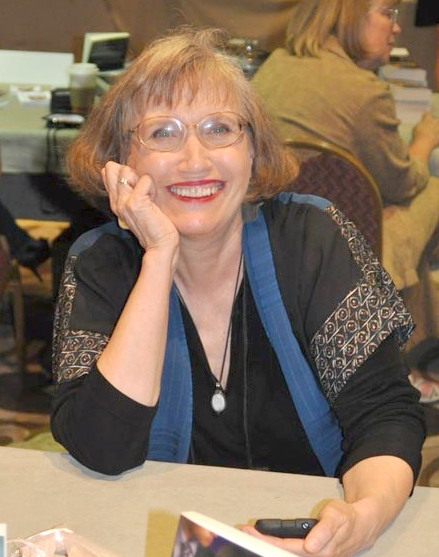
About Bonnie McCune

Bonnie is a Denver-based author whose interest in writing led to her career in nonprofits doing public and community relations and marketing. She’s worked for libraries, directed a small arts organization and managed Denver's beautification program. Simultaneously, she’s been a free lance writer with publications in local, regional, and specialty publications for news and features. Her main interest now is fiction writing, and her pieces have won several awards.

Getting Edited and Editing

 Guest blog: Hear from a writer on the ups and downs of editing                 

 meg_benjamin          By Meg Benjamin 

Earlier this year, Samhain Publishing, which bought my first book, Venus In Blue Jeans, as well as nine others, announced that they were closing. Like most of Samhain’s authors, I was saddened. I knew many people who worked for them, a very talented bunch.

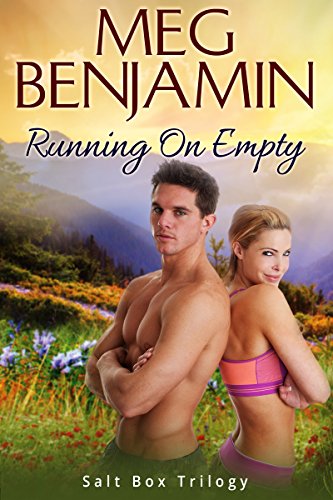
But Samhain’s closure had a more immediate effect for me. It meant that my novel Running On Empty was no longer scheduled for publication. I could have tried to find another publisher; but the chances of anyone wanting to take on the third book in a trilogy where the other two books belonged to Samhain were slim at best. I could have let it go, leaving the trilogy unfinished, but I didn’t want to do that.

My third choice—and the one with which I decided to go—was publishing the book myself. Self publishing (or “indie” publishing) is increasingly widespread. An entire industry has sprung up for authors who want to present their own, professionally produced books, including experts in art, editing, and formatting.

Self-meg-benjaminpublishing involves two main expenses—covers and editing. Of the two, beginning writers are more likely to spend on the former than the latter. They’re making a big mistake.I came to this conclusion from a unique perspective—I was a freelance copy editor myself for several years. At one time I had large chunks of the Chicago Manual of Style memorized (note to fellow copy editors—it goes away with time). No way I would edit my own stuff.

On the simplest mechanical level, you tend to read through your own errors, even your own typos. You know what’s supposed to be there, and your brain supplies it even when it’s missing. But a good editor will do a lot more than just catch your mistakes. A good editor will tell you where you’re going wrong in your story and your characters. Editors come to the book cold, without any information about your struggles to get it finished (unlike, say, critique partners). More importantly, they’re not paid to be your friend. The editor is there to provide you with a flat assessment of the weak spots in your work, along with some hints about how to fix them.That’s what you want.

My editor was brutally frank about the highs and lows of Running On Empty, my newest book.I won’t lie—some of it hurt. The pain of criticism is necessary and frequently based on your realization that your work wasn’t as perfect as you thought. When readers complain  indie books are “unreadable,” they may be referring to works that haven’t received the benefit of an independent editor. I was able to produce a much better work thanks to my editor’s guidance.

Years ago, I was part of a critique group led by a well-known author. Group members ranged from rank beginners to seasoned, multi-published writers. A couple of the beginners had never been critiqued before, and they both responded with very public meltdowns. Eventually they both withdrew from the group after a loud denunciation of all of us for our lack of sympathy with their writing. Do I have to tell you that neither of those writers ever made it into print (at least so far as I know)?

Editing does cost a lot. Many editors charge by the word, and most of us write books in the 50,000 to 90,000 word range. But the investment pays off. Edited books may have weaknesses, but they’re usually things the author knowingly chose to do.

For better or worse.

(Meg Benjamin is an award-winning author of contemporary romance, including the Award of Excellence from Colorado Romance Writers. Visit her at MegBenjamin.com or facebook.com/meg.benjamin1. )


Do you have holes in your head, holes in your jeans, holes in your head AND your jeans?

jeansWith the exception of a brief period of time from age 15 to 24, I’ve never been a fashionista. During my teens and post-adolescence, finding my way among my peers, my attention to fashion seemed mandatory since it occupied a great deal of attention from my friends. Thereafter I focused on family and career, believing that style failed to hold the importance of those other areas.

I don’t belittle women who waste lots of time shopping, reading fashion magazines, and thinking about style. That’s their choice.

But one fad irritates me no end. I find it patronizing and ridiculous. That’s the decision to wear jeans with holes in them. Most frequently in the knee area, but also across thighs, calves, even buns, some with a combination of all three, and a greater or lesser amount of exposure. Usually called “distressed” or “ripped,” you purchase these already hole-y or you buy new ones and cut, tear and wear into the pattern of your choice. They’re usually worn with $400 high heels, leather jackets, and $75 manicures and pedicures.

There’s the rub. Believe it or not, there are people in this country and this world who can’t afford new clothing. They wear pants with rips, holes, and patches, not with self-satisfaction and preening, but with numb acceptance. Perhaps there are some who dress with pride in rags because they are triumphing over their circumstances. They know the importance of NOT defining themselves by the cost or condition of their garments.

Distressed pants coopt, embrace qualities like rebelliousness, individualism, populism. In the 60s and 70s, counter-culturists wore distressed jeans to recycle useable materials, to protest a consumerist materialistic culture, or to express their creativity through embroidery and artistic patches.

Most women wearing ripped jeans now have no idea what their appearance advocates. As they step adroitly out of the way of a homeless bag lady asking for a handout, as they toss money in a high-end store to purchase a piece of clothing that could feed a family in poverty for a week, they make a mockery of the realities of life for the poor. They insult people too broke to buy decent attire. My 12 year old niece might be excused because she’s still trying on personalities and interests. An adult woman? Not so much.

Are they a fashion or a fad? Fashion lasts longer and tends to emulate “prestige groups,” although some commentators see the process as a mutual exchange. Fads come and go quickly and tend not to originate in the elite. They’re ephemeral and follow the pattern of a craze, first exciting and capturing notice, spreading quickly, finally fading into nothingness.

In the case of distressed pants, a slap in the face of every needy individual in the world, we can only hope. You’re not fooling a soul. You’re neither fashionable nor socialist.

Every Table has a Story; But I Still Do Not Owe You an Autobiography

end_table_5_800(With this piece, I’m starting a series of guest blogs featuring other individuals’ extraordinary lives, stories and thoughts. Comments welcome.) 

My mother found a small table in the street. Someone had discarded it and she carried it home. Her friend the furniture store owner refinished it for her. She carried an end table across the alley from a friend’s house. One of the tripod feet caught on the gate and broke off. My father, exasperated each time that she brought something home, felt the need to bring its mate home for her. Again, her friend the furniture store owner had it refinished for her. Her incomplete sets of china with their beautiful cup and saucer or delicate serving platter also have their own stories to tell.

When I took my friend Kathy on a tour of my new home, before these pieces were able to find a more fitting place, she was mesmerized by the provenance of my home furnishings. Somehow, their histories added to their decorative beauty and value.

As I pondered on the intrigue that these stories held for Kathy, I began to think about the private tales each person has to tell. We all know that person who seems to have it all – beauty, brains, career, money, respect. We think that he or she never “suffered” in order to attain success. How many times does a celebrity make a public outcry that people do not know what he went through to achieve success?

For that matter, how many times does each of us make the same outcry? We do not have to be a celebrity to have people in our lives who do not know – or, acknowledge – our histories. There is the friend who tells you that you are so lucky to live in that house. There is the employer who tells you that you have not suffered enough for your job.

In order to get them to “shut up” we feel pressured to reveal every setback which we faced. The response to this revelation? Varied yet mechanical. There is the “thank you for sharing” response; or, the “stop feeling sorry for yourself” response; or, the “I don’t believe you” response. We are neither sharing nor feeling sorry for ourselves. More importantly, we have failed to establish a rapport or any understanding.

Unlike a table that cannot reveal its stories one by one to the other tables, as humans with brains and souls, we should have the opportunity to reveal our stories to other people – slowly and comfortably. Then, we are truly sharing.

Each of us has wonderful stories to tell, stories which can be woven into an extraordinary autobiography. Just do not ask me to hand it to you in one encounter.

Written by Carolina L., pseudonym, an attorney in Denver, Colorado. Carolina is originally from The Bronx, New York which is fertile ground for many stories.

CAN A SAFETY PIN HOLD THE WORLD TOGETHER ?  DOUBTFUL, BUT IT’S DESIGNED TO TRY

safety-pin


Safety pins, invented in 1849 by mechanic Walter Hunt, are so common we hardly think about them unless a piece of clothing needs temporary support. Some of their uses have fallen out of favor, such as holding together diapers on babies or attaching sanitary napkins to old-fashioned belts. British punks made them a fashion statement. One performer claims safety pins were used to remedy “the arse of your pants falling out”, but they quickly moved into body decorations where they pierced ears, noses, and who-knows-what else. Other uses have swelled in popularity, namely attaching four to a participant’s shirt to an athletic event number.

A recent use is as a political statement. Wikipedia puts forth a claim that the Dutch wore secret safety pins to symbolize unity during WW II, although this hasn’t been validated. After the 2016 UK Brexit vote, safety pins were used by people to show solidarity with refugees and other migrants.

Now this innocuous item is a response to the US presidential election.  By fastening a safety pin to their clothing, people hope they’re allying themselves with groups threatened and bad-mouthed by politicians. I hastened to pin mine on recently. But after a few days wearing it, I’ve removed it.

Why? Now it’s become yet another instance of how people use any circumstance to criticize and bad mouth one another. Or a topic that bloggers, constantly under self-generated pressure to produce writing (like me), can plumb. One blogger described the movement as mainly self-serving and useless, for people who agree politically to identify each other. Other people have taken to the net to launch attacks against wearers because the pins are a sop to white consciences.

I give up. Whatever the election accomplished, the brouhaha over safety pins has crowned. No more efforts by me to support what I in my naiveté have always done—support lost causes. I’ll take all my safety pins and simply use them to jab things.

By the way, I’ve seen no one else in my area wearing a safety pin.

When your house falls down around your ears, what do you do? If you’re me, you panic!

actress-fear-and-panicOur distinctive 123 year old house is crumbling slowly to the ground. Rather into the pit that’s our cellar. We’ve been enamored of old houses and neighborhoods forever. Not for us the cookie cutter multiplicity of suburbs, the monotonous colors and finishes that pinpoint the economic class and lifestyles of their residents. Historic homes are distinctive and wrap us in the story of their times and people.

Why? I know that in our rush to be individuals, my family firmly placed ourselves in a marketing niche. According to market segmentation, we’re odd ones out, choosing to raise our kids in the central city, focused on learning and community rather than status. At the time I learned about marketing classifications, I would have died before accepting any label, but in truth, we were in a group that comprises about 2 to 3 percent of the population.

We loved our quirky old house, built the same year women got the vote in Colorado. Loved its strange angles, its tacked-on back porch, its crumbly cellar. However, the older I’ve gotten, the more tired I’ve become. Or perhaps the enthusiasm for certain challenges has waned. I began longing to move into a new residence, preferably one with no outdoor chores such as shoveling snow and as few indoor chores like scrubbing tile grout as possible.

At this time, the third instance of foundation problems, the current situation with my house simply aggravates my desire. It also has induced a desperation bordering on paranoia. My bed’s directly over the front door, which no longer shuts properly because it’s started leaning about 20 degrees. As I try to fall asleep, I’m dogged by fears the bedroom will plummet an entire story or two when the brick wall fails and we fall down. Uncomfortable conditions in which to relax.

Terror accomplishes nothing. I could pack a bag and rush to a hotel, but repairs will be long-term, and I can’t afford a hotel for the duration. Call my insurance company and beg them to cover costs despite clear exceptions for this type of work. Drone on and on to my friends with my complaints (which I do). As my heartbeat speeds up and my temperature rises, I try to breathe deeply and organize a plan. When this plan approaches six months and sixty-thousand dollars, I panic more.

Hold on. Since nothing seems to alleviate the reaction, I’ve decided certain events, such as hurricanes, war, and the deterioration of foundations are inevitable. Like childbirth labor, no matter how much I may twist and scream, I have to get through them. I can accomplish this foaming at the mouth OR with as much grace as I can muster. This line of thought provides me with a focus and a goal, so I trust I’m at least on a positive path now, not at the mercy of the Fates.