Bonnie is a Denver-based author whose interest in writing led to her career in nonprofits doing public and community relations and marketing. She’s worked for libraries, directed a small arts organization and managed Denver's beautification program. Simultaneously, she’s been a free lance writer with publications in local, regional, and specialty publications for news and features. Her main interest now is fiction writing, and her pieces have won several awards.
The huge silver maple in front of our house in the parking strip began shedding sections of trunk and branches. I might have thought the sky was falling, until I saw the entire road blocked by wood. These weren’t a small inconvenience. They blocked the entire road, smashed cars parked underneath, and required emergency (and expensive) removal by tree services.
Needless to say, the city forester told us the entire tree has to come down. We’ve adjusted to this order, but every time I look at the plant, my heart contracts. It’s got to be about 120 years old, 75 feet high, and 15 feet in diameter. It’s kept us cooler in the summer and served as home to birds, squirrels, probably other critters I don’t know.
What I didn’t realize was the amount of affection our neighbors held for our giant. I’ve never met so many residents as I have in the past few weeks. Without exception, they all bemoaned the pending loss. I began to hope the tree is able to receive some of these good feelings as it prepares for termination. It’s given us so much, it deserves to know of our appreciation.
So I began to wonder if trees have consciousness or spirits? When I was a child of about eight, I thought everything had a life-force. Small animals, bugs, flowers, trees, perhaps even rocks and earth. I later learned this is called animism, the belief that all objects and creatures possess a spiritual essence, common in primitive cultures. Little did I know I was dabbling with philosophy and anthropology, but I managed to outgrow the cumbersome compulsion to apologize to every ant I stepped on or insure all my dolls received their bottles.
However, my animism reactivated toward my tree. I think of what the tree must have been like when it first started growing. Since I live on the plains, prairie was all around, not forests. Did it grow from natural seeding, or did a human coax a sapling into survival? How many parents and children stood in its shade as it grew, thankful for its shelter? Did it feel pain when branches broke in blizzards?
There are religions and spiritual values that believe in the consciousness of all things, or at least living things. Some people who believe plants can feel and react, have systems similar to nervous systems of animals.
One of these was poet Joyce Kilmer. “I think that I shall never see a poem as lovely as a tree,” he wrote. This classic exposition about a tree contains in its simple lines the entire relationship of living things to one another. “Poems are made by fools like me, but only God can make a tree,” he finished.*
So when the noisy, violent chainsaws start up outside my house and bite into my maple, I hope on some level it realizes how much it will be missed.
*An interesting aside, Kilmer died in battle during WW I, cutting short his outpouring of poetry and making him one of millions sacrificed throughout the centuries on the altar of human brutality. No tree would put a bullet through a living thing’s life-source.
(In this guest article, Dr. Laurie Weiss points out the benefits of work that you really enjoy.)
When I was about 12, I learned a secret! I could do something I loved (at the time it was sewing) and, if my mother approved of it, she would think I was working (as I was supposed to) when I was really playing. It’s a secret worth sharing because it made all the difference.
My life has been richer, fuller and more exciting than I ever imagined it could be. During my undergraduate career I agreed with my physics professor to not pursue advanced courses because, after all, I would just be getting married. I did get married and worked to put my husband through graduate school. Fifty-six years, two children and five grandchildren later, I can look back with amazement.
Along the way I have also been a lab technician; a science teacher; psychotherapist; trainer of psychotherapists, teachers and business professionals; lecturer in 13 different countries; executive and life coach; a business owner; and author of 8 self-help books (with spines) and assorted other materials. I have also been blessed by elephants in India, walked on hot coals, visited Camelot, flown over the pyramids, and viewed the erotic temples at Khajurajo, India.
Two accidents (my introduction to transactional analysis in 1968 and to feminism in 1970) led my husband and me to create a business and personal partnership that far exceeded my wildest expectations.
Having the tools to make a positive difference in people’s lives turned out to be both intoxicating and addicting. And the kind of learning I was exposed to along the way transformed how I experience the world. When I considered retirement, I discovered that it was difficult to have the kind of meaningful conversations I love and that people actually pay me to have. So I keep on looking like I am working but really playing.
Then about 5 years ago another accidental encounter led me in a new and fascinating direction. I was introduced to an almost unknown healing method. You can ‘look inside the book’ at http://www.BooksbyLaurie.com/go to read about that strange experience in my newest book Letting It Go: Relieve Anxiety and Toxic Stress in Just a Few Minutes Using Only Words (Rapid Relief with Logosynthesis®)
I am committed to helping people learn to love and appreciate themselves and each other. I have an unshakeable belief, based on over 45 years of experience, that people are doing the very best they can with the resources they have available to them at any given moment.
Learn more by downloading your free copy of a Quick Start Guide: Using Logosynthesis® to Release Anxiety, Stress and Worry http://www.BooksbyLaurie.com/guide
Laurie Weiss, Ph.D. and her husband Jonathan B. Weiss, Ph.D. live and work in Littleton, CO. They are the only Certified Master Logosynthesis Practitioners in the US. LaurieWeiss@EmpowermentSystems.com
My dentist and hygienist tell me at every visit, “Keep up the flossing.” And I do, even though not everyone agrees about the benefits of the practice. Those who favor it think, In addition to the potential for reducing cavities and gum disease, flossing makes their mouths feel fresher, cleaner.
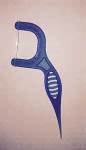
Flossing seems to have become wide-spread in the 80s. Prior to that time, I can’t remember a dentist pushing the practice nonstop. And late in that decade a variation made its mass-market debut—the flosser pick. Pretty clever. It eliminates the onerous chore of pulling out the floss, cutting it, twining it around your fingers. Plus it often comes on colorful and artistically designed holders.
Therein lies the problem. Flosser picks are so cute, so appealing, thousands are using the tools in any location they find themselves. They then abandon the devices, dropping them randomly everywhere. I happen to see the ones outside. They dot sidewalks, parks, beaches, gutters, streets, playgrounds.
I wonder if our collective dental health has improved significantly with the proliferation of flosser picks. Perhaps they’ve simply become substitutes for cigarettes. Many of us seem to be orally fixated. Since we can’t suck our thumbs in public, we substitute food, gum, nail biting. And cigarettes. Now that cigarette smoking is frowned upon socially, have people switched in flosser picks?
I’ve got to believe that flosser picks are just as much litter problemsas cigarette butts. They’re not biodegradable, they’re ugly once abandoned, they can stab toes and soles, and animal health would be threatened should any ingest the flosser picks. In the litter competition, flosser picks are challenging the butt’s domination.
Here’s the kicker: you may pat yourself on the back that you’re using flosser picks even if they create a bit of litter. But experts say picks aren’t as effective as the old fashioned string floss. So don’t break your arm congratulating yourself.
(In this guest blog by Brian Jud, learn some marketing tips that apply to many products and services in addition to the book business.)
The term special sales is commonly used to describe sales opportunities outside of bookstores. Also referred to as non-bookstore (or non-traditional) marketing, it can be a profitable source of new revenue.
The best way to exploit this opportunity is to divide it into two segments. One is retail in which you reach buyers using a network of middlemen. The other segment is comprised of direct sales to non-retailers that use books as marketing tools.
1) Selling to retailers. You are already familiar with this sector. You find distributors or wholesalers to get your books into retail outlets where they are sold off the shelf to consumers. Payments are made in two or three months and unsold books are returned.
* Discount stores and warehouse clubs. Books are discounted heavily and do not offer the same margins of some larger-ticket products. Therefore, these retailers limit shelf space to the “brand-name” authors and top-selling books.
* Airport stores. Books on management, investment, economics, business biography, personal finance and health sell well among business travelers. Books for children also tend to do well in these outlets, especially children’s “activity books.” Popular fiction always sells in this environment.
* Supermarkets and pharmacies. Cookbooks, travel books and regional titles move in supermarkets, but health-related topics sell better in drugstores. Children’s titles also seem to do well in supermarkets, but fiction remains the mainstay there.
* Museums, zoos and national parks. Most of these have a gift shop, and to get in them you must demonstrate how your books can educate and entertain their guests.
* Gift shops. This category includes large chains such as Pottery Barn, Yankee Candle, Bath and Body Works, Pier One and Crate & Barrel, Hallmark Stores and Spencer Gifts. It also includes hotel and hospital gift shops.
* Specialty stores. You could sell your “expert” books in home-improvement centers, pet shops, auto-supply stores, camera shops, toy stores or business-supply stores – retailers that serve identifiable groups of people with a common interest in your content.
2) Non-retail sales. Corporations, associations, schools and the armed services buy books directly from publishers. You sell directly to buyers in these organizations. Sales are typically made in large quantities, returns are rare and payment is received more quickly.
* Businesses. Call on product or brand mangers who may use your books to introduce new products, to reward buyers for making a purchase or as a gift to customers.
* Associations. There are over 135,000 nonprofit membership organizations worldwide. Consider donating a percentage of each sale to a charitable, non-profit organization to help finance their cause.
* Schools. The academic marketplace is an opportune segment for publishers, one using books as a foundation for its existence. It impacts people of all ages, from pre-school through graduate school and adult education courses.
* Military. You can sell books domestically or overseas, to military exchanges and libraries, Department of Defense Dependent Schools, onboard ships, to retired military personnel and to the families of military personnel.
Special-sales marketing is not a separate way of doing business. It is not even a new way of doing business. It is an integral part of overall marketing strategy. Simply divide non-bookstore marketing into its two component parts and you may find hundreds, if not thousands of prospective customers for your titles.
Is using zip-locked bags at restaurants a sign of growing old? i asked myself this the other day in a luncheon meeting attended in the main by seniors or mature adults as they’re now called by some. At the end of the meal, several opened their purses and pulled out their own plastic sacks for leftovers, and i recalled times I’d seen my older relatives do the same. Indeed, my father at about age 70 raided the centerpiece on the buffet line at a steakhouse, claiming, “Oh, they want you to take the whole fruits and vegetables.”
As a self-proclaimed environmentalist of many years standing, I’m torn by this action. What if they favor bringing their own containers? That’s more acceptable. Obviously tossing some Tupperware Is a greater emotional challenge than ridding yourself of a flimsy sack. Or is my problem the association of baggies with aging? i have sufficient signs of my status, what with my gray hair and creaking knees, shortened temper, and equally shortened height. I don’t need anyone, or myself, using my salvage of leftovers as an additional indicator of my status.
In most of this country, it’s acceptable to pack and remove remaining food from your restaurant meal. Not always the case over the globe. Appears that Europe is exempt from this habit in the main, while Asians cheerfully carry nibblies out. However there are exemptions even here. The idea of toting goodies after a private dinner is widely disputed in advice columns, and I don’t think it’s ever been resolved. Should you, as the hostess, offer leftovers to guests, particularly if they potlucked the original dish in? Or do you, as hostess, deserve all the leftovers because you took the time and trouble to organize the party?
From experience I can tell you salvaging food after an event is not necessarily a happy situation, regardless of the money you think you’re saving on your food budget. Ask my husband who suffered through approximately ten dinners of leftover turkey, starting with sandwiches through tetrazzini and on to several days of turkey soup disguised as stew, then stroop, finally thin soup.
Certainly guests should ask, or, better yet, wait for the hostess to offer before knocking others out of the way to secret the remaining prime desserts in your tote made of any kind of material. Do you want to save a few pennies and, at the same time, lose a friendship?
Then there are business functions.The best advice is never to save remnants from these functions. Makes you appear desperate and cheap, two conditions to avoid if you’re hoping to impress bosses or clients.
I’ve strayed far afield from my original hypothesis—that carrying zip-locked plastic bags marks you as aging. Maybe my sensitivity to the potential of personality characteristics to adversely set me apart from the general population is too great. I need to decide if my over-riding concern is money, environmentalism, or stereotypes. I’ll ponder that question while I snack on some cheese tidbits I rescued from yesterday’s meal out with neighbors.
 The huge silver maple in front of our house in the parking strip began shedding sections of trunk and branches. I might have thought the sky was falling, until I saw the entire road blocked by wood. These weren’t a small inconvenience. They blocked the entire road, smashed cars parked underneath, and required emergency (and expensive) removal by tree services.

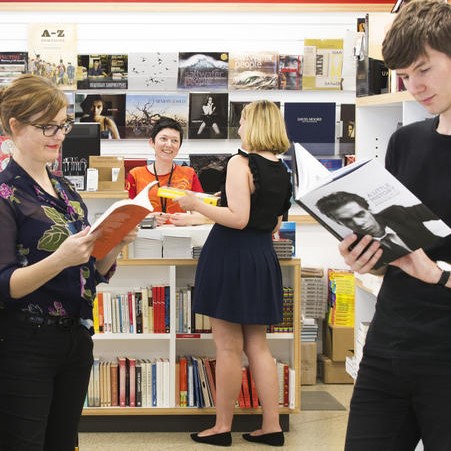 The term special sales is commonly used to describe sales opportunities outside of bookstores. Also referred to as non-bookstore (or non-traditional) marketing, it can be a profitable source of new revenue.
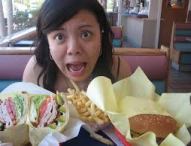 Is using zip-locked bags at restaurants a sign of growing old? i asked myself this the other day in a luncheon meeting attended in the main by seniors or mature adults as they’re now called by some. At the end of the meal, several opened their purses and pulled out their own plastic sacks for leftovers, and i recalled times I’d seen my older relatives do the same. Indeed, my father at about age 70 raided the centerpiece on the buffet line at a steakhouse, claiming, “Oh, they want you to take the whole fruits and vegetables.”
 Bonnie McCune, author