About Bonnie McCune

Bonnie is a Denver-based author whose interest in writing led to her career in nonprofits doing public and community relations and marketing. She’s worked for libraries, directed a small arts organization and managed Denver's beautification program. Simultaneously, she’s been a free lance writer with publications in local, regional, and specialty publications for news and features. Her main interest now is fiction writing, and her pieces have won several awards.

Can Saving Money or Possessions Threaten Your Happiness and Comfort?

I get my penny-pinching ways from my father. He grew up in the Depression and never escaped his childhood habits. If bananas were cheaper at one store than another, that’s where he’d head. He saved rubber bands, string (pieces tied together and wound in big balls), children’s clothing passed down from one to another, magazines. He wasn’t a hoarder; his things were fairly well organized, and he didn’t purchase for the sake of the buy. He was a saver. Once he recycled an old lounge chair into a bed for my little brother’s overnight visits. He pinned the fraying, interlaced webbing to the frame when it began wearing out. Another time he used a rope as a belt. Fortunately, although I was humiliated in public, this wasn’t with a business suit but over the weekend.

Now I’m somewhat the same. I’ve washed, saved and re-used small plastic bags and dutifully accumulate the larger ones for groceries and trash. At restaurants I pack home the bread that accompanies meals and bits of leftover meat and vegetables destined for soup. I excuse myself by claiming to be a conscientious environmentalist, tender of the earth.

I can’t blame these habits simply on my environmentalism though. I often compare prices on menus to see if ordering à la carte is cheaper than ordering the dish as it’s listed. The other day I discovered if I asked for eggs, toast, and hash browns separately, I’d save almost two dollars! When I pointed this out to my patient granddaughter, she simply nodded and murmured “mmm-hmm.” My thrifty ways embarrass her. When my family was poverty level, I prided myself on cost-cutting. It was a game to see what I could save.

Now that I no longer am broke, I still pride myself on my parsimony. But I’m beginning to wonder why. What am I saving things, including money, for? Shouldn’t I allow myself to enjoy it? This idea occurred to me when I caught myself wanting to scold my husband for writing the items he wanted me to buy at the grocery store ON A SEPARATE PIECE OF PAPER, not on my original list! Didn’t he know he was wasting paper? Even I had to admit this was going a little far. After all, I make our scratch paper from sheets with one blank side rescued from the trash.

More importantly, I may be denying myself opportunities to delight in my life by focusing so much on saving. Let loose and have some fun, I tell myself. Buy a new coat since the old one is threadbare (I did). Donate the broken futon to someone who will repair it, and buy yourself another (I did that, too). Go out to dinner once a week. Pay someone else to paint the living room. Take that cruise now that I can afford it. After all, the value of money lies in freeing me to experience different things and to relieve me of the tedium of poverty. As long as my income is five dollars more than my expenses, I’m rich.

Talk Is Cheap and We Get What We Pay For

Like the weather or football, when health’s the topic, we always have something to talk about. Especially as we mature. One stereotype of aging is that people talk more and more about their health, and not in a good or positive way. Apparently, we drone on to the point of boring our listeners. Why? Two possibilities: health preoccupies our time and our thoughts to a greater degree, or because we have fewer other interests.

Decades ago, after suffering through regular rounds of extreme boredom at family gatherings during which senior relatives delivered lectures about symptoms and treatments, I and my friends took oaths decades never to prattle on and on about our ills. In our smug superiority, this was our promise, yet our practice nowadays is to rush into a room with a litany of languishes. This doesn’t improve our conditions, it certainly fails the test of conversational interests, yet each of us can’t wait for the other to yield the floor so we can launch into our personal spiel. I know one woman who complains frequently about older friends that discuss health to exclusion of nearly every subject. When done with this, she promptly indulges in a recitation of every ache and each therapy she’s undergone in the past several months.

Why do we do this? None of us are doctors, so we can’t diagnose or relieve or provide a service, although we’re never prevented from expressing our opinions. In fact, we usually wind up trotting out every particle of information or opinion we’ve stumbled over related to a health condition. These may be contradictory, erroneous, or pea-brained. Makes no difference. Still fascinating. To us if not you.

Perhaps in this manner we enhance our friendships. Or air our secret fears. Or simply pass the time in a more appealing fashion than discussing the climate. However there should be limits. When someone complains of indigestion, surely no more than five or ten theories as to cause and effect are reasonable to explore in casual conversation. Apparently not. Gluten, wheat sensitivity, irritable bowel syndrome, gastritis, appendicitis, acid reflux, lack of probiotics, food poisoning, various cancers, autoimmunity offer some of the possibilities. Every person we know has experienced one of these at some point. Even if not currently suffering from some ill, the equally interesting aspect of what we’ve done that’s led to our status.

Many suggestions (dare I say too many?) about what to do, what’s good, what’s a cure-all eat up as much chatter as complaints themselves. I’ve known supporters for a particular diet, say macrobiotic trot out an entire grocery list and menu plan, then threaten me with disaster if I don’t comply with their belief. Because health connects to all aspects of life, debates quickly expand to incorporate economics, government, art, and psychology, even death, because everyone dies from something.

My primary quarrel with heath as a topic of conversation lies in its tedium. People simply won’t turn off their repetitive, monotonous, self-centered spiels. I want to yell, “Someone turn on Wheel of Fortune!” I’m nearly ready to plead for politics as a replacement. Equally boring, but at least people get angry, hot under the collar, so the energy flows, and we just might be exposed to a new idea.

A COVER NOW REVEALED

ANNOUNCING MY NEW BOOK, NEVER RETREAT, TO BE PUBLISHED IN MARCH 2018, BY Imajin Books.  A feisty single mom clashes with an ex-military, macho corporate star at a business retreat in the wild Colorado mountains, where only one can win a huge prize. But when a massive flood imperils their love and survival, they learn the meaning of true partnership.

I’ll be organizing some give-aways as well as the opportunity to receive a e-copy for those interested in preparing reader reviews for online sites. Contact me at Bonnie@BonnieMcCune.com if you’re interested.
Rocky Mountain High at an Advanced Age: a short and successful journey to pot use

I’ve been an anti-drug advocate for eons. It’s probably because I feel my grip on reality is so tenuous, if I started using, I’d be dependent. I also have seen the impact of drug abuse on friends and relatives, even worse the tangled, chaotic, destructive pain they dump on their supposed loved-ones.

Yet count me in the ones who advocate de-criminalizing the stuff. It’s proven we’ve lost the War Against Drugs, and these efforts don’t make a dent in drug use.  Their impact—ruining lots of lives with long prison sentences, raising taxes, splitting families.

This stance opened the door and my eyes to the use of marijuana. As campaigns to legalize the stuff spread, I began to learn about people who have been helped by their use—health concerns such as arthritis, epilepsy, cancer treatments.. I heard the scare tactics from decades ago, which created my intense paranoia about negative impacts, were very much blown out of proportion. Then my home state legalized use several years ago.

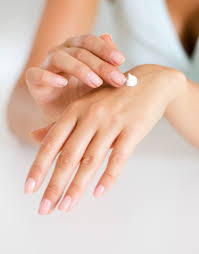
In what might be considered serendipity, I was suffering from an autoimmune condition  that affected my legs. Discomfort, itchiness, restlessness kept me awake at night. My search for relief brought me to seven or nine kinds of skin creams and lotions, various over-the-counter pills, and sleep techniques, none of which really helped. During lunch with a friend, she mentioned she suffered from arthritis in her knees. Since she’s an avid hiker, she’d also been chasing a treatment that would enable her to continue her exercise. Turned out to be a marijuana cream and patches.

She accompanied me to a marijuana dispensary and helped me through my first meeting with a salesman. In a candid interchange, she told me what helped her and what I might consider. I walked out with a salve which turned out to relieve my aches and pains. Every person is different, and some aren’t helped. The treatment doesn’t cure me, isn’t uniformly effective, but does more than anything else has.

After my little sampling of this psychoactive drug, I’m most pleased to find that I’m capable of changing my mind. Many people, me included, feel the older you get, the more rigid you are. How you are at about 30 pretty much sets the pattern for the rest of your life, except you get more inflexible in your opinions. Not a good position to be in, for we all should be able to face new situations, learn new information, and adapt for our own benefit.

This is one old dog who’s learned a new trick.


The Power of the Mind

In my paranormal suspense novel, A Human Element, Laura Armstrong can perform telekinesis. What exactly is telekinesis? It’s the action of mind on matter, in which objects are caused to move as a result of mental concentration upon them. Is it science or fraud? Akin to seeing spirits or not? And if one believes in ghosts, are they inclined to believe in other paranormal phenomenon too, like telekinesis?

Another term grew from telekinesis: psychokinesis. PK, as it’s known, encompasses a wider group of mental force phenomena that telekinesis now falls under. Did you know that PK Parties were a cultural fad in the 1980s? Groups of people were guided through rituals and chants to awaken metal-bending powers, or perhaps it was just another excuse for a party! Either way, you can read about it from PK party founder, Jack Houck. Real or fake? You decide.

The psychokinesis phenomenon dates back to early history though. In The Bible, for example, Jesus is described as creating water into wine, healing the sick, and multiplying food. Let’s not forget it’s also in pop fiction today, like Stephen King’s Carrie. Hollywood gives us Poltergeist.

Ouija boards were also a PK fad. I had a frightening experience with one when I was eleven years old. A friend and I channeled an “evil spirit” through the board who levitated the Ouija’s movable indicator. The spirit told us to find a boulder in the woods with an “X” on it. That would be where we would find hidden green treasure. We found the boulder but the only green treasure we found was the angry, green icy flow of the raging creek that nearly swept us away that February day. That was my last attempt to play with a Ouija board. It scared the Devil out of me, literally it seemed!

Most scientists believe that the existence of telekinesis has not been convincingly demonstrated. I’m not sure what I believe, but I do think there are amazing discoveries about how the brain works to still be found. I do know I will never touch a Ouija board again.

My experience and my fascination with mental powers fueled the writing of my character of Laura Armstrong who can move objects with her mind.

I believe we can do so much more with our brain powers.
What do you believe?

P.S. I’m also giving away a $25 Amazon gift card below!

by Donna Galanti


About A Human Element:
One by one, Laura Armstrong’s friends and adoptive family members are being murdered, and despite her unique healing powers, she can do nothing to stop it. The savage killer haunts her dreams, tormenting her with the promise that she is next. Determined to find the killer, she follows her visions to the site of a crashed meteorite–her hometown. There, she meets Ben Fieldstone, who seeks answers about his parents’ death the night the meteorite struck. In a race to stop a mad man, they unravel a frightening secret that binds them together. But the killer’s desire to destroy Laura face-to-face leads to a showdown that puts Laura and Ben’s emotional relationship and Laura’s pure spirit to the test. With the killer closing in, Laura discovers her destiny is linked to his and she has two choices–redeem him or kill him.

Praise for A Human Element:
A Human Element is an elegant and haunting first novel. Unrelenting, devious but full of heart. Highly recommended.” – Jonathan Maberry, New York Times best-selling author

Praise for A Hidden Element:
“Fascinating…a haunting story about just how far parents will go to protect, or destroy, their children in the name of love.”—Rebecca Cantrell, New York Times best-selling author

Purchase A Human Element here: On sale for just $0.99 10/27 – 11/2! http://mybook.to/AHumanElement

Purchase A Hidden Element here: On sale for FREE 10/27 – 10/31!
http://myBook.to/AHiddenElement

Donna Galanti Bio:
Donna Galanti is the author of the paranormal suspense Element Trilogy and the children’s fantasy adventure Joshua and The Lightning Road series. Donna is a contributing editor for International Thriller Writers the Big Thrill magazine and blogs with other middle grade authors at Project Middle Grade Mayhem. She’s lived from England as a child, to Hawaii as a U.S. Navy photographer. Donna enjoys teaching at conferences on the writing craft and marketing and also presenting as a guest author at elementary and middle schools. Visit her at http://www.elementtrilogy.com and http://www.donnagalanti.com. She also loves building writer community. See how at http://www.yourawesomeauthorlife.com

Connect with Donna:
Twitter https://twitter.com/DonnaGalanti
Facebook https://www.facebook.com/DonnaGalantiAuthor/
Goodreads https://www.goodreads.com/author/show/5767306.Donna_Galanti

Enter to win a $25 Amazon Gift Card:
Rafflecopter HTML Code :
a Rafflecopter giveaway
https://widget-prime.rafflecopter.com/launch.js

Rafflecopter link: http://www.rafflecopter.com/rafl/display/ddcc91cd22/?