
About Bonnie McCune

Bonnie is a Denver-based author whose interest in writing led to her career in nonprofits doing public and community relations and marketing. She’s worked for libraries, directed a small arts organization and managed Denver's beautification program. Simultaneously, she’s been a free lance writer with publications in local, regional, and specialty publications for news and features. Her main interest now is fiction writing, and her pieces have won several awards.

WRITING A POEM IS DISCOVERING [Robert Frost]


I find myself turning more to poetry the older I get. Maybe because I’m uncertain about the process of aging. I thought I’d have more answers, but I get more uncertain with each passing day. It seems I can come to grips with that uncertainty, and, by the way, with insomnia, by indulging myself.

Here is a line 

Here is a line,

A place, a space,

Where she is and she is not.

Containing finite territory and infinite ether.

Side by side. Both parts are her. Seen and unseen.

How can this be? Yet it is.


“Metastatic breast cancer.”

She speaks with practiced ease from saying the words a thousand times,

Thinking them a million times.

Where she is now will become the reverse,

an absence.

Where she is now will transmute into a void.

How will I know her shape when she is gone?

Both halves exist now. Her and not-her.

Both halves will continue afterwards. Her and not her.

She walks, a shape, a shade, at the same time,

Her presence, gradually losing substance until she becomes her own counterpart.
 

I wait day by day.

Grasp the wisps of her

Flowing through my fingers like fog.

Hardly satisfactory, now or then,

Until she is missing.

Only a hollow,

Nothing to be done

Except fill the outlines of both sides of her with my pain

(©) 2019.

SUMMER CONCERT ON THE STAPLETON GREEN 2018


Jump for joy.
Run and throw arms up and out,
Spin, whirl, twirl, hair trailing, blowing.
Always moving, never stopping, somersaulting, kicking, vaulting.
Leap off stairs, roll down hills.
Toss balls and handfuls of grass, even an umbrella if                                                         you have one,
Or a little brother.
Pull skirts over butts, shoulders, heads.
Break things—toys, sticks, balloons, but not bones.
Sob when mom says no.
Pick nose, scratch sting, bite sister.
Lick a Popsicle, spit a wad, chew a taffy, suck a straw, munch a cookie.
Scream, howl, whistle, sing.
Skip, race, yell, punch.
Hair and arms and legs flying.
Small last one trying, always failing
to keep up.
No matter.
Laugh, smile, cry, shout.
Turn, dance, clap in time or out
Hug, kiss, stroke, pinch, cry.
Chase, catch, push, knock down.
Dance, parade, prance.
Faces smeared with ice cream, dirt, chocolate, mustard.
Look up. Clouds, sky.
Look around. Trees, park, people.
Trip, fall, laugh, cry.
Everyone loves someone here.
Yes, even the blond toddler blasting anger.
How long will this last? How long can it?
Harvest energy and life unbound.
A new crop next year.

c. 2018

(I’ve been trying my hand at more poetry, usually grounded in the everyday)

Help! I Fell Off the Social Media Craze and Can’t Get Up. Harnessing social media to influence people.

People continually advise authors, along with realtors, inventors, political strategists, and salespeople, to harness the power of social media to reach out to the public. All well and good, but the methods to achieve this are sorely limited, partly by their very numbers and variety and the amount of time required to become skilled at using them. The basics are to create a web page, initiate a blog, tell everyone you know how to get on them, jump on Facebook and Twitter, add a newsletter and other outlets as you’re able. But the strategies to accomplish this successfully are a mystery to me as dark and deep as the methods to build the Egyptian pyramids.

I went online with the publication of my second novel, about 5 years ago. Despite regular postings (all right, perhaps not as regular as they should have been), sign-ups have never shown a dramatic increase, nor have sales of books. I usually feel as if I’m talking to myself, okay in my case, for I mine the postings for nuggets I can use for my syndicated features and other freelance work. I tell myself that someday I’ll pull items together to publish a collection of think pieces. Sure. Just like someday I’ll lose those final 15 excess pounds. Nagging at the back of my mind is a sneaking suspicions I’m wasting my time.

I’ve tried to initiate a social media wave or trend on behalf of other, non-writing activities, to promote a conference or advertise a holiday festival. I’ve posted myself and begged others to do the same. To no impact. Still it’s tempting to think, “If I could reach out to five people, and they could reach out to five, and those could reach out to five, I’d soon reach a mob.” Doesn’t seem to work for me.

I’d still be a skeptic except for the coincidence of my witnessing an actual social media blitz which I initiated without intention. Some time ago I became aware of a great, free, online movie service marketed through libraries. Kanopy offers movies at no charge to library card holders of participating libraries. These aren’t usually brand new, big ticket, glitzy movies. They tend to be “artsy,” foreign and classic movies that appeal to smaller audiences. But they’re great. I’ve caught up on a number of favorites and ordered kids’ movies for my grandson. I’m currently watching Frank and Robot, a near-future fantasy with Frank Langella.

I happened to mention Kanopy to several friends at lunch. One went home and posted a remark on her Facebook account. Overnight several of her contacts talked about how great the service is. Shortly after more people contacted her with raving positive reviews. With one contact, I’d estimate at least ten people reacted initially, and who knows how many have praised and advertised Kanopy since then?

So I witnessed a social media trend right in front of me. Why was the Kanopy item so popular? Ideas: Everyone likes movies of some sort or another. Everyone likes free services. Everyone likes to share information that shows them to be early adapters or in the know.

Now if I could just apply these lessons to selling my books, I might have a chance of building a base for my own writing. I’m still struggling with that. The real challenge.

Holiday Songs That Always Make Me Cry

The holidays are supposed to be a time for cheer, happiness, partying, peace, good will. While I certainly participate in striving for these, there are certain holiday songs that always make me cry. Considering these, I think it may be that they envision a better type of human, a more empathetic and caring society. Not fashionable these days, I know, but with my schizophrenic personality, half cock-eyed optimist, half gloomy cynic, I’m able to live with the contradiction.

The first isn’t traditional at all. Written by Jerry Herman in the ‘60s, “We Need a Little Christmas” is from the musical Mame. It seems to insist that we stop all this nonsense with wars and greed because “I’ve grown a little leaner, Grown a little colder, Grown a little sadder, Grown a little older.” Certainly true of both me and the world.

The next can be guessed by many, “So This Is Christmas” by John Lennon, also known as “War Is Over” (good luck with that). This song gives all of us a much-needed scolding. “What have we done, Another year over, a new one just begun?” Sad to think Lennon was unable to convey his lesson in time to change his own fate.

Although the subject of “Good King Wencelas” is a saint from about 900 a.d., lyrics were written in 1853 and paired with a 13th century tune. I love the story captured in the song, the miracle of heat in the sod, and the admonition “Ye who now will bless the poor, shall yourselves find blessing.”

The next probably won’t be familiar. I learned “Masters in this Hall” in the fifth grade from my wonderful singing teacher, who passed along so much history and appreciation of music. Another hybrid of an old French tune and lyrics by Englishman William Morris in 1860, it carries an openly revolutionary message. “Nowell, nowell, nowell, nowell sing we loud! For today our poor folk raised up and cast a-down the proud.”

Even a tune so innocuous it seems simply a paean to the season can carry inspiration for humanity. “God Rest Ye Merry, Gentlemen” (note the comma, thus making the statement a command to gentlemen at large, as well as gentlewomen), slips in words of encouragement and counsel. “With true love and brotherhood each other now embrace. . .oh tidings of comfort and joy.” Surely only the most radical in the 1600s as well as intervening years even dreamed of universal brotherhood, although the definitive term may be “gentlemen,” since in those days most people were excluded from the category.

Finally, “Oh, Holy Night.” In addition to its electrifying melody and soaring exhortations, its subtle message of “A thrill of hope, the weary world rejoices, for yonder breaks a new and glorious morn” provides an optimistic message for us to whistle or hum during the holiday season.

There you have it. My personal list of holiday favorites, always sure to tweak my emotions with thoughts of what humans are and what they could be, if only. If you see me driving along the street at this time of year, tears streaming down my face, you can be fairly sure I’m listening to one of my favorite Christmas songs.

My Neighborhood Is Obsessed with Pumpkins, and the Great Pumpkin’s Delighted

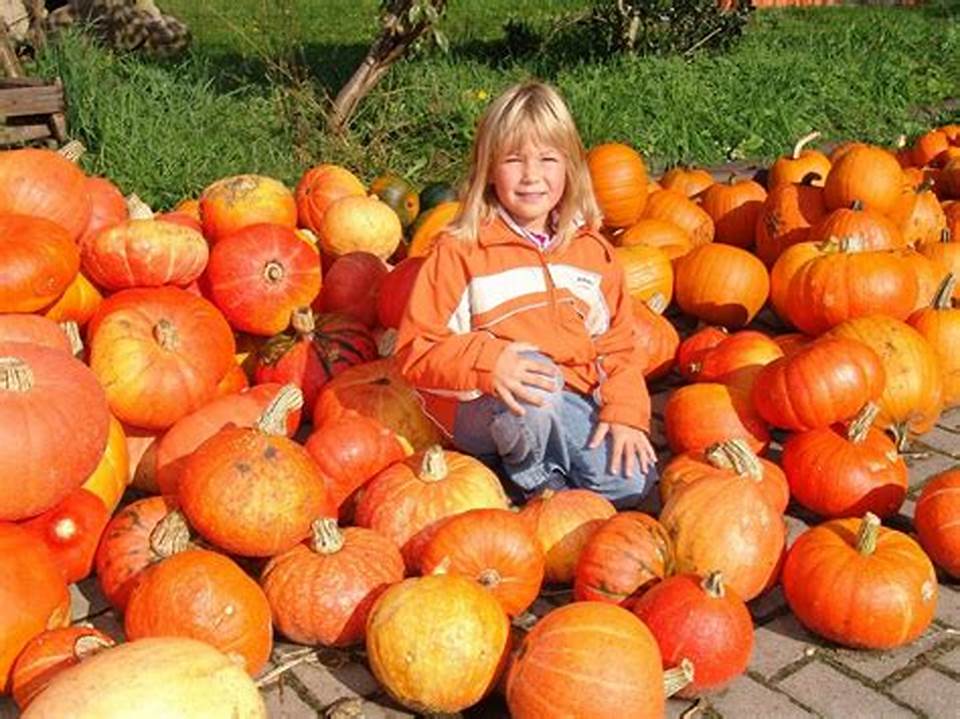
For reasons unknown, a fad in my neighborhood during fall and culminating on Halloween is pumpkins. Multiple pumpkins. Large, small, lumpy, smooth, often orange, punctuated with white, green, sage, multi-colored. On my walks I started counting numbers of pumpkins on porches. Very few have only one (I myself have two), and the winner so far is 16.

I don’t know why. Granted I’m in a family-heavy neighborhood where children are cherished and indulged as if they were tiny royals. Also an area with no poverty, whose residents can choose to dispose of their disposable income as they wish. I shouldn’t quibble, indeed, I’m not even sure what “quibbling” is, because I adore seeing the variety and the panache with which the home owners place their harvest bounty. Some stack several orbs on top of one another, some group colors and textures with care. Many set off large pumpkins with several miniature ones. Others combine real produce with the man-made variety. One home with front stairs positioned a pumpkin at the end of each step all the way up to the top. Another, with a short brick retaining wall, marched the produce all along the top, as if presenting the front entry to the world.

Squirrels treat outdoor decorative pumpkins as their personal grocery store. In my old neighborhood, which seemed to have ten squirrels for every resident, a pumpkin was fortunate if it survived overnight on the porch without a gnaw. My new neighborhood has fewer critters. Still last year only a few days passed before the golden fruit (yes, pumpkins are technically fruit) was attacked.

I’ve collected suggestions on squirrel repellents. The silliest one was to place several pumpkins together, as if propitiating the squirrel god by providing one sacrificial sphere. This only drives the critters into an eating frenzy. The defense that seems to succeed is to combine two techniques. I sprayed the pumpkins with hairspray, then sprinkled them with liberal doses of cayenne pepper.

I wonder if the proliferation of decorative pumpkins is another indication of our surfeit of consumerism. Surely no one other than pie makers NEEDS sixteen pumpkins. Still this is one glut I don’t object to. I tell myself we’re helping out the pumpkin farmers as well as delighting children and passersby, then give myself permission to simply enjoy the symbol of harvest bounty. Maybe I’ll dig out the seeds to roast and nibble on. That will justify my permissive attitude.