Does the banning of books protect children and the weak-willed or does it interfere with our freedom and intellect?

courtesy Ryan McGuire of Bells DesignI recently read The Perks of Being a Wallflower, by Stephen Chbosky. This tale, set in the early 90s, carries overtones of The Catcher in the Rye and other coming-of-age novels, climbed the best seller lists, spawned a decent film, and spurred controversy.  After I finished it, I wondered if it would wind up on the list of most-challenged books (a challenge is an attempt to remove or restrict written materials), and sure enough, it did.
The Top Ten Challenged list, produced annually by the American Library Association, serves as a rallying point for pro- and con- censorship advocates. The 2013 compilation contains two other books I’ve read, The Absolutely True Diary of a Part-Time Indian, by Sherman Alexie, and The Hunger Games by Suzanne Collins. While I’m unable to weigh in on the value of Captain Underpants or Fifty Shades of Gray, never having read them, the Alexie work ranks as one of the top 25 or so contemporary novels I’ve ever read, and The Hunger Games contains vivid examples of issues suitable for passionate insights into and discussions around contemporary society.

Years ago, our leaders struggled with the definition of porn. A book had to have some sort of redeeming social value to be allowed into the public’s grasp. That debate seems to have disappeared, but the good fight remains, especially to protect children. Does each of the books on the challenged list contain redeeming social value? Perhaps. Should any of them be pulled off the bookshelves? Doubtful.

One reason for censorship is the protection of minors. Another is that reading about questionable behaviors only encourages them. Unfortunately the news and daily life demonstrate that reality, not fiction, imposes itself on everyone of any age. Our children have to learn about mass murders (Columbine), murders based on gender and race (Matthew Shepard), neglect (foster children loaded with drugs for psychotics), terrorists (Boston marathon), international terrorism (9/11), along with untold instances of bullying abuse, rape. Who can protect our kids from knowledge about those horrors? They’d better be prepared to deal with these issues, at least at the emotional level.

Some things occur outside your sphere of interest to impact you, whether you want them to or not. The books on this list and similar offerings allow readers to work through their own emotions, responses to soul-searing issues.

When we all faced 9/11, my three-year old granddaughter taught me a lesson to deal with tragedies and controversial issues. Despite being sheltered from disturbing visuals, she knew something bad had happened. She also noticed people exhibiting American flags as a symbol of undefeated spirit.  Failing to distinguish between one flag and another, she collected small state flags and displayed them around the house to raise everyone’s spirits. That’s when I realized the importance of taking a positive step to establish your control over yourself and life.

That’s exactly what these books provide—a way to begin to comprehend the amazingly complex issues children as well as adults face. The ruckus over these particular books eventually will die down and others take their place. An example, few seem to complain nowadays over Madonna’s Sex book.

Or maybe not.  The Catcher in the Rye still raises hackles in some communities and visits the most-challenged list regularly. It also appears on numerous best-books lists.

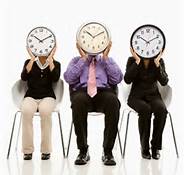
(photo courtesy Ryan McGuire of Bells Design)

It’s About Time, The Time Is Ripe, Time Is Money, and Is Time Really on My Side?

clocks people

Where does the time go? At the beginning of the day (week, month, year), it seems like a huge void to put to use any way I please. At the end of the period, I turn around and see no progress. Why can’t I fill time in the way I want?

The problem is time’s limited. When I was young, I saw no end. It stretched limitless in front of me. I knew I always could make that trip to Paris sometime, if not this year. Now, from this end of the life span, time has no beginning but many endings.

There are things I should do with my time. My blog, for instance. When my first novel was published, the entire world told me I had to create a blog. Further advice from experts added the blog should appear at least twice a week and have at least two links to other websites in it. This is proving to be impossible as winter colds, summer vacations, reruns of HIMYM, playing with grandson, depression, house cleaning, going to the gym, naps, balancing the checkbook, in short anything else, takes precedence.

What time I do have, I spend most of it reading emails or trying to sleep. Guilt induces me to compensate by making lists of responsibilities or desires to work on eventually. The effect time has on my lists is zero. To wit:

My to-do lists don’t differ much now from when I was 18. Then they included:

  • Write

  • Study French

  • Lose 15 pounds

  • Exercise

  • Clean and organize closet

 Now they include the same main topics but have increased in complexity:

  • Write

  • Lose weight (o   5 pounds, o   10 pounds, o   15 pounds, o   20 pounds, o   25 pounds)

  • Study (o   French, o   Music self-taught on recorder, o   Stimulating mind games)

  • Exercise (o   Stretches, o   Dance, o   Jogging, o   Bike)

  • Clean and organize (o   Papers, o   Photos, o   Old magazines)

I always think if I just get organized enough, I should be able to cram 48 hours worth of activity into 24.  I’ve never succeeded, although I’m known as ultra-efficient. My sister-in-law once told me I was the most organized person she knew. In a burst of insight, I realized the flaw in her statement. I’m the most disorganized person, but I’m so threatened by chaos, I frantically try to control it through creating order.

I have a fall-back position on this process. In a voice down the ages from five centuries ago, Francois Rabelais advised, “With Time, all things are revealed.”